Career
Your career is the primary vehicle for wealth accumulation across your lifetime. Strategic career choices determine not just your income level, but your financial trajectory for the next three decades. Research shows that career advancement decisions made early compound dramatically—a 5-10% annual income increase through career growth transforms financial futures. Understanding your career as a wealth-building tool, not just employment, fundamentally shifts how you approach professional development, job transitions, and skill acquisition. Your career decisions today are arguably the most important financial decisions you'll make.
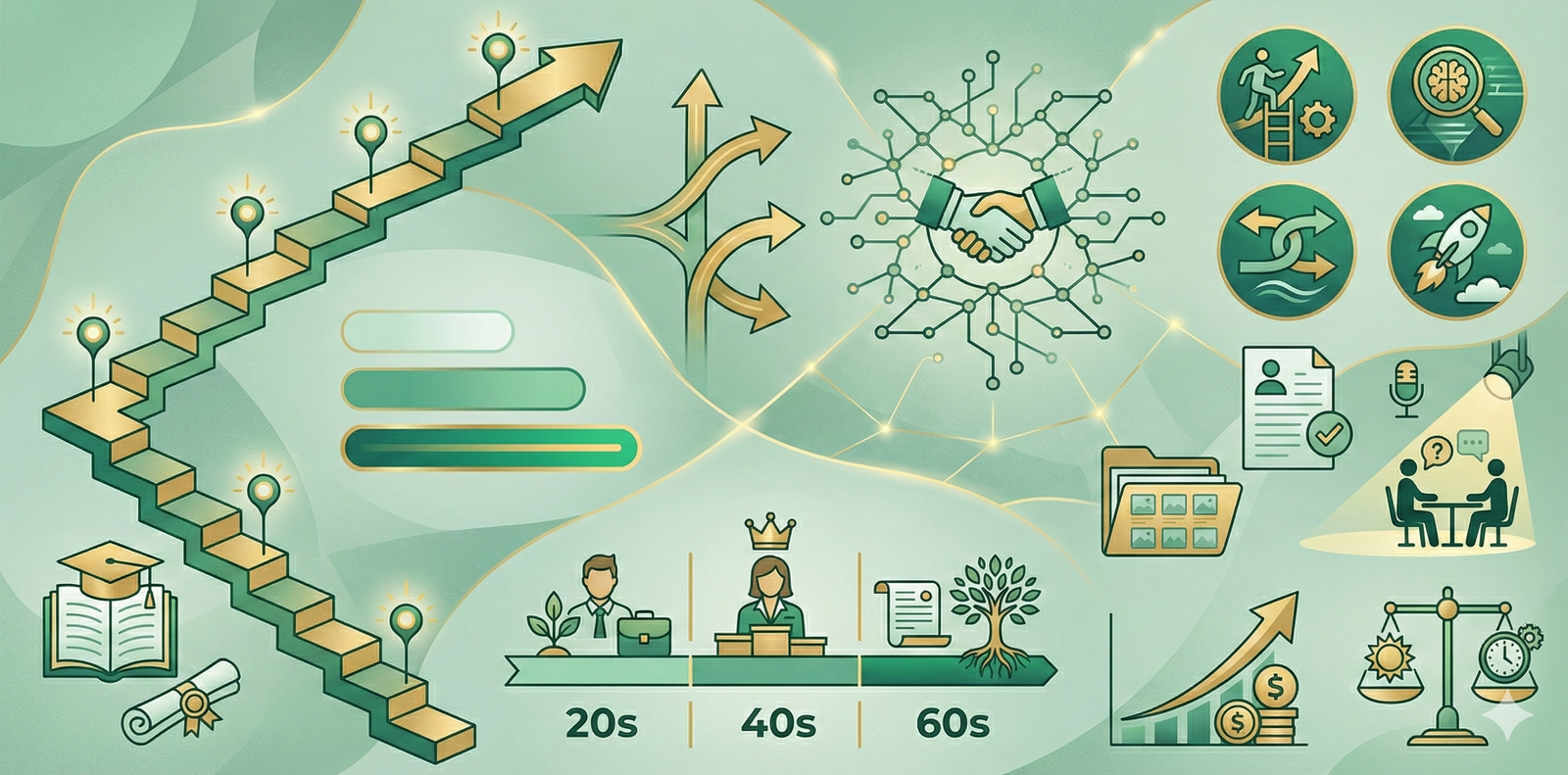
Most people leave enormous career wealth on the table because they don't strategically connect their professional development to financial goals. This article breaks down how to use your career intentionally to build lasting wealth.
The intersection of career planning and financial stability reveals that educational choices, job transitions, and skill development directly impact lifetime earnings and wealth accumulation potential.
What Is Career?
A career is the progression of work and professional experiences throughout your lifetime, combining your skills, education, achievements, and roles within a chosen field or across multiple fields. However, from a wealth-building perspective, your career is fundamentally your income stream—the primary source of capital for wealth accumulation. Your career represents decades of compounding income growth, investment opportunities, and financial security. The strategic development of your career directly determines how much capital you accumulate, how quickly you can invest, and ultimately, whether you achieve financial independence.
Not medical advice.
Your career encompasses your professional identity, the trajectory of your earnings, the skills you develop, the networks you build, and the opportunities you create. Unlike a job (which is employment), a career is a deliberate path you construct to achieve both professional fulfillment and financial goals. The decisions you make about education, job selection, skill development, and career transitions compound over time into either significant wealth or missed opportunity. Strategic career development means viewing your professional life as a 40-50 year wealth-building project.
Surprising Insight: Surprising Insight: Graduates with bachelor's degrees earn approximately 66% more than peers with only high school diplomas—a difference that compounds to over $1 million across a lifetime.
Career as Your Primary Wealth Engine
Illustrates how career development drives wealth accumulation through income growth, investment capacity, and compound financial returns
🔍 Click to enlarge
Why Career Matters in 2026
In 2026, career development has become even more critical for wealth building because the job market rewards specialization, continuous learning, and strategic career moves. AI integration is reshaping professional landscapes—workers who update their skills stay competitive, while those who don't face stagnant wages. Career advancement through deliberate skill acquisition, certifications, and strategic job transitions now determines whether you're among those experiencing wage growth or wage stagnation.
The relationship between career planning and financial success has never been clearer. Your career decisions affect not just this year's income, but your long-term wealth accumulation potential. The wealthy understand that career is a strategic wealth-building project, not just a series of jobs. Small improvements in career trajectory—switching to a role with 10% higher compensation, developing in-demand skills that command premium salaries, or moving into leadership positions—compound into dramatic lifetime wealth differences.
Economic research demonstrates that workers who actively manage their career development experience 11% annual wage growth early in their careers, compared to stagnant growth for those who don't. The opportunity cost of career neglect is enormous. In an economy increasingly shaped by AI and automation, career agility—your ability to learn new skills, pivot between roles, and adapt to market changes—becomes your primary wealth insurance policy.
The Science Behind Career
Research on career dynamics reveals clear patterns about how careers drive wealth accumulation. Studies using decades of worker data show that early-career wage growth averages 11% annually for workers building foundational skills. This high growth rate is critical—it represents your wealth-building window. Workers who compound this growth through strategic advancement can accumulate dramatically more capital across their lifetimes than those who experience flat wage trajectories.
The science also reveals that career advancement opportunities significantly impact employee motivation, job satisfaction, and retention. When workers see a path for advancement, they stay engaged, develop skills at higher rates, and ultimately earn more. Conversely, workers who perceive no advancement opportunities often experience burnout, reduced motivation, and wage stagnation. This creates a compounding problem: lack of career development leads to reduced engagement, which leads to reduced advancement, which perpetuates wage stagnation. Breaking this cycle through deliberate career planning is essential for wealth accumulation.
Career Growth Compounding Formula
Shows how consistent annual income increases compound into significant lifetime wealth differences
🔍 Click to enlarge
Key Components of Career
Education and Credentials
Education forms the foundation of career wealth-building. The data is unambiguous: graduates with bachelor's degrees earn 66% more than those with only high school diplomas. This isn't a one-time advantage—it's a lifetime multiplier. When you compound a 66% salary advantage across 40 years of work, plus the investment returns on that additional income, the difference exceeds $1 million. Beyond traditional degrees, certifications and micro-credentials increasingly provide competitive advantages. In 2026, employers specifically seek candidates who demonstrate continuous learning through certifications, courses, and skill validations. Strategic education investments—choosing fields with high earning potential, acquiring skills aligned with market demand, pursuing advanced degrees when they unlock significantly higher salaries—are fundamentally wealth-building decisions.
Skill Development and Specialization
Your marketable skills determine your earning potential. Workers with specialized, in-demand skills command premium salaries. The wealth-building approach to skills means: (1) identifying skills that have high market value, (2) developing depth in those skills through deliberate practice, (3) staying updated as skill demand evolves, and (4) continuously acquiring adjacent skills that increase your versatility. AI integration in 2026 makes this more critical than ever. Workers who develop expertise in AI-adjacent roles, data analysis, complex problem-solving, and creative work earn significantly more than those limited to routine tasks that can be automated. Your skill portfolio directly determines your income trajectory and wealth-building capacity.
Strategic Job Mobility
Research on career progression reveals that strategic job changes often accelerate wage growth more than staying in a single role. Workers who move between positions strategically can experience faster advancement to leadership roles, exposure to new skills, and higher compensation. However, this requires intentionality—moving strategically toward roles with higher earning potential, broader responsibility, or skill development, rather than moving randomly. The wealth-building approach to job mobility means evaluating not just salary, but total compensation, growth trajectory, skill development, and network expansion. Sometimes taking a lateral move with lower immediate salary but superior learning opportunities accelerates your long-term wealth-building capacity.
Network and Opportunity Access
Your professional network directly impacts career opportunities and compensation. Research shows that referral hires often earn more than candidates from external markets. Your network connects you to job opportunities, mentorship, business partnerships, and investment opportunities. Building a strong professional network—through industry conferences, professional associations, informational interviews, and genuine relationship development—creates a wealth-building asset that pays dividends across your career. The wealthy understand that network expansion is a deliberate career strategy, not something that happens accidentally.
| Education Level | Average Starting Salary | Estimated 30-Year Earnings |
|---|---|---|
| High School Diploma | $35,000 | $1,500,000 |
| Bachelor's Degree | $58,000 | $2,500,000 |
| Advanced Degree/MBA | $75,000 | $3,200,000 |
How to Apply Career: Step by Step
- Step 1: Define your 10-year career vision: Where do you want to be professionally? What income level? What responsibilities? What skills? Make this specific and written.
- Step 2: Assess current skills and education gaps: Identify what knowledge, certifications, or experience you need to reach your 10-year vision. Be honest about gaps.
- Step 3: Create a learning strategy: Determine which skills to develop first based on market demand and your timeline. Prioritize high-impact, income-affecting skills.
- Step 4: Identify role progression opportunities: Map potential roles between your current position and your target role. Which positions build the skills and experience you need?
- Step 5: Develop strategic networking plan: Identify industry leaders, mentors, and peers in your field. Build genuine professional relationships through regular engagement.
- Step 6: Evaluate total compensation, not just salary: When considering roles or employers, analyze benefits, retirement contributions, stock options, professional development budgets, and growth potential.
- Step 7: Build expertise in emerging areas: Focus on skills related to AI, automation, data, and complex problem-solving that create competitive advantages and command premium salaries.
- Step 8: Create accountability systems: Share career goals with mentors or coaches. Schedule regular progress reviews. Track income growth and skill development milestones.
- Step 9: Document career achievements: Maintain a record of accomplishments, projects led, problems solved, and value created. Use this evidence when negotiating raises or applying for positions.
- Step 10: Revisit and adjust annually: Career markets shift, opportunities emerge, and circumstances change. Review your career strategy yearly and adjust based on market conditions and personal evolution.
Career Across Life Stages
Adultez joven (18-35)
Young adulthood is your wealth-building foundation stage. During these years, you establish career trajectory through education choices, entry-level positions, and skill development. The focus should be on rapid skill acquisition, experimentation with different roles to find your fit, and deliberately building market value. Take calculated risks—move between roles to find your niche, invest in education that commands premium salaries, develop specialized skills early. This stage compounds dramatically—a 5-year head start in career development creates a 15-20 year advantage in wealth accumulation. The choice between a moderate career path and a high-growth trajectory during these years has lifetime implications.
Edad media (35-55)
Middle adulthood is when your career choices truly compound. By now, early career investments show returns through promotions, leadership opportunities, and significantly higher compensation. Focus on maximizing income, transitioning into senior roles with higher earning potential, and potentially starting ventures that leverage your accumulated expertise. This is also the stage where your wealth-building capacity is highest—you have peak earning power combined with compound growth on prior years' investments. Strategic career moves during this stage—such as transitioning into management, specialized roles, or consulting—can dramatically accelerate wealth accumulation. Additionally, building passive income or side ventures becomes more feasible with established expertise.
Adultez tardía (55+)
Later adulthood involves leveraging decades of accumulated expertise and capital. Career focus often shifts toward either maximizing final years of earning (if needed for financial goals), gradually transitioning to advisory roles, building legacy projects, or moving toward wealth preservation and optimization. Many find the most fulfilling and lucrative opportunities emerge in this stage through consulting, advisory roles, teaching, or entrepreneurship leveraging their expertise. Career becomes less about accumulation and more about impact and optimization—making sure the wealth you've built through your career continues growing and achieving your life goals.
Profiles: Your Career Approach
The Strategic Climber
- Clear advancement pathways and skill development opportunities
- Regular feedback and performance metrics
- Exposure to high-level decision-making and strategic work
Common pitfall: Staying too long in comfort roles, delaying challenging transitions that accelerate growth
Best move: Deliberately seek stretch roles, build sponsor relationships, and move into leadership where compensation scales exponentially
The Specialist Expert
- Deep expertise development in specific valuable domains
- Community of peers who validate and advance their expertise
- Opportunities to become the go-to authority in their field
Common pitfall: Specializing too narrowly and becoming vulnerable to market shifts in that specialty
Best move: Build related skills that complement expertise, become recognized thought leader, command premium rates through recognized authority
The Flexible Adapter
- Diverse learning opportunities and exposure to multiple domains
- Roles that reward continuous skill acquisition and versatility
- Networks across industries and disciplines
Common pitfall: Lacking deep expertise in any domain, becoming generalist without premium value
Best move: Identify 2-3 complementary skills to combine into unique value proposition, build portfolio career with multiple income streams
The Entrepreneur
- Autonomy, control, and ability to directly tie effort to financial reward
- Market validation and customer feedback loops
- Business and financial acumen alongside domain expertise
Common pitfall: Leaving employment before establishing sufficient capital or business acumen, failing to manage business finances
Best move: Build expertise, save capital, learn business fundamentals, validate market demand before full transition, maintain network
Common Career Mistakes
Prioritizing comfort and stability over growth during peak earning years. The greatest career wealth-building mistakes happen in the 25-45 age range when you have maximum time for compound growth ahead. Choosing stability over slightly uncomfortable growth roles means sacrificing decades of compound income advantage. The wealthy and financially independent often made uncomfortable career transitions during this window.
Neglecting to view career strategically as a wealth-building project. Most people treat career as a series of jobs rather than a deliberate wealth-building path. This means they don't intentionally develop high-value skills, don't strategically evaluate career moves, don't build wealth-creating networks, and don't leverage their peak earning years effectively. Strategic career thinking—connecting each role to your 10-year vision, evaluating total compensation rather than just salary, deliberately developing premium-valued skills—transforms financial outcomes.
Ignoring market demand and continuous skill development. Career markets change. Skills that were premium-valued 5-10 years ago may be commoditized or automated. Career wealth-building requires ongoing awareness of market trends, emerging skill demands, and continuous skill development. Workers who ignore market shifts and fail to update skills experience wage stagnation while market-aware peers accelerate income growth.
Career Development Success Framework
Shows key pillars supporting sustainable career growth and wealth accumulation
🔍 Click to enlarge
Ciencia y estudios
Research on career development and wealth accumulation consistently demonstrates the critical importance of strategic career management. Studies tracking workers across decades reveal clear patterns about how career choices compound into lifetime financial outcomes.
- Richmond Federal Reserve Career Progression Study: Research on wage growth shows workers experience 11% annual wage growth early in careers when they build foundational skills, but growth slows significantly over time—making early career investments critical.
- Oxford Academic Competition and Career Advancement: Research demonstrates that competition and market dynamics determine career advancement opportunities, emphasizing the importance of developing valued skills and strategic networking.
- PMC Career Growth and Wellbeing: Studies show that career growth opportunities significantly boost motivation, engagement, and job satisfaction—which directly supports sustained wage growth.
- Career Development in Emerging Markets Research: Studies identify training and development access as critical barriers to career advancement, emphasizing the importance of investing in deliberate skill development.
- Lifetime Earnings Premium Study: Research demonstrates bachelor's degree holders earn approximately 66% more than high school graduates across their careers—a difference compounding to over $1 million.
Tu primer micro hábito
Comienza pequeño hoy
Today's action: Define your three-year career vision in writing: (1) desired role or position, (2) required skills and experience, (3) target annual income. Spend 15 minutes this week creating this clarity document.
Career wealth-building requires direction. Most people drift rather than build intentionally toward specific goals. Writing your vision crystallizes thinking, creates accountability, and focuses your development efforts. This single clarity document becomes your strategic compass for job selection, skill development, and opportunity evaluation over the next three years.
Track your career milestones and get personalized AI coaching on professional development with our app.
Evaluación rápida
How would you describe your current career development approach?
Your career clarity level directly impacts your wealth-building trajectory. Those with clear vision experience 3-5x greater income growth than those without strategic direction.
How intentionally are you developing skills that create competitive advantage?
Deliberate skill development is the primary driver of career income growth. Strategic learners experience 2-3x greater wage growth than those relying on on-the-job learning alone.
How strategically are you building your professional network?
Network quality determines opportunity access and compensation. Those with strong professional networks earn 15-25% more than isolated peers and experience 2-3x more advancement opportunities.
Take our full assessment to get personalized recommendations.
Discover Your Style →Preguntas frecuentes
Próximos pasos
Your career is your primary wealth-building asset. Transform it from something that happens to you into something you deliberately construct toward financial goals. This week, invest 30 minutes in creating your three-year career vision—specific role, required skills, target income. Make it written, specific, and measurable.
Then identify one high-impact skill to develop this year that directly supports your vision. Register for a course, find a mentor, commit to deliberate practice. Finally, evaluate your current professional network—identify three key people to build deeper relationships with over the next quarter. Career wealth-building compounds through consistent, strategic actions over months and years.
Get personalized guidance with AI coaching.
Start Your Journey →Research Sources
This article is based on peer-reviewed research and authoritative sources. Below are the key references we consulted:
Related Glossary Articles
Frequently Asked Questions
How much does career planning really impact lifetime wealth?
Dramatically. Strategic career choices compound across decades. The difference between a career path averaging 3% annual income growth versus 7% exceeds $800,000 in lifetime earnings across a 30-year career. When you factor in investment returns on that additional capital, the wealth differential becomes multiples of the income difference.
Is it too late to change my career direction for wealth building?
No. While early career decisions compound advantage, every year remains relevant for wealth building. A career change at 35 or 45 to a higher-earning path still compounds significantly. Additionally, many people build substantial wealth through career transitions that accelerate income or create business opportunities. The key is intentionality—move toward specific value rather than running away from current situations.
Should I prioritize salary or growth opportunity when evaluating job offers?
This depends on your career stage and wealth-building timeline. Early career, growth opportunity often matters more than salary—developing valuable skills and establishing trajectory matters more than immediate compensation. Mid-career, balance both—you want compensation that meets financial needs while pursuing roles that scale earnings potential. Late-career, salary becomes more important as compound growth time diminishes. Evaluate total compensation (salary, benefits, growth trajectory, learning opportunity) rather than salary alone.
How do I identify which skills to develop for wealth building?
Identify skills with proven market demand that command premium compensation. Look at: (1) job postings for high-paying roles you aspire to—what skills are consistently required?, (2) industry trends—which skill areas are growing?, (3) automation resistance—which skills can't be easily automated?, (4) uniqueness—which skill combinations are uncommon? Develop skills that are valuable, growing in demand, and somewhat rare in the market.
What's the relationship between career success and financial independence?
Career is the primary wealth-building tool for most people. Your career's income drives how much capital you accumulate for investment. Higher income from strategic career development means faster wealth accumulation and earlier financial independence. Studies show people who treat career strategically reach financial independence 10-15 years earlier than those who don't. Career intentionality directly enables financial independence.
Take the Next Step
Ready to improve your wellbeing? Take our free assessment to get personalized recommendations based on your unique situation.
- Discover your strengths and gaps
- Get personalized quick wins
- Track your progress over time
- Evidence-based strategies