Sinking Fund
Imagine facing a $2,000 car repair bill next month and feeling your stomach drop. Or wanting to take a vacation but watching it vaporize your emergency fund. A sinking fund prevents this anxiety by letting you save gradually for predictable expenses. Instead of scrambling when the bill arrives, you've already set aside exactly what you need. This simple strategy transforms planned expenses from financial emergencies into anticipated milestones.
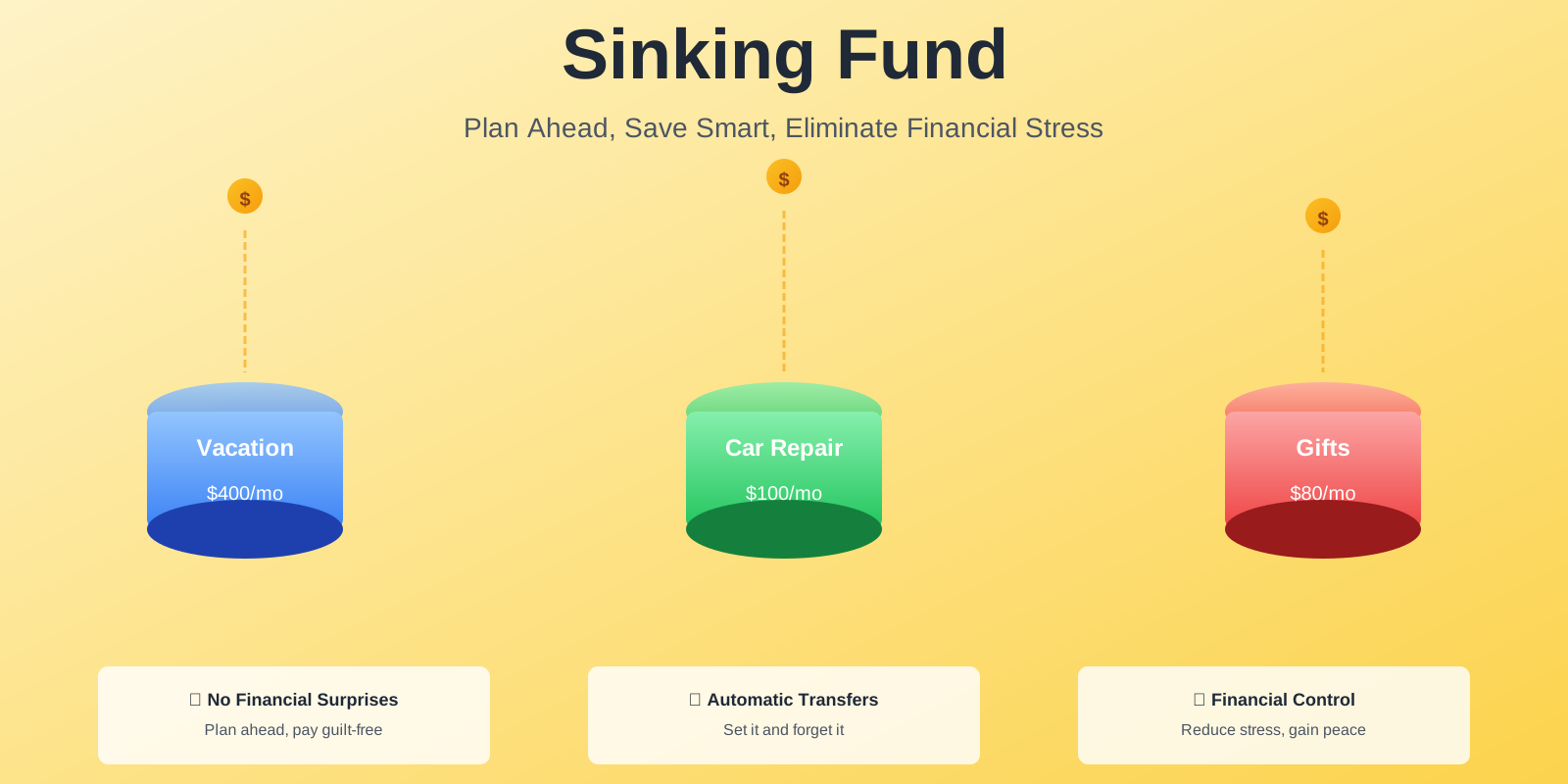
The beauty of sinking funds lies in their flexibility—you control exactly how much to save each month, which expenses matter most to you, and where your money goes.
By breaking large expenses into small monthly contributions, sinking funds eliminate the emotional weight of big purchases and give you genuine financial freedom.
What Is Sinking Fund?
A sinking fund is a dedicated savings account where you set aside small amounts of money each month for a specific, planned expense you know will occur in the future. Unlike emergency funds that cover unexpected crises, sinking funds are for anticipated costs like vacations, vehicle maintenance, insurance premiums, home repairs, or holiday gifts. You determine the total cost, divide it by the months until you need it, and contribute that amount regularly until you reach your goal.
Not financial or investment advice. Consult a qualified financial advisor for personalized guidance.
The term 'sinking' comes from corporate finance, where companies set aside money to pay off future debt obligations. The idea is that your fund 'sinks' money gradually into a reserve. This same principle works powerfully for personal finances, transforming the way you handle irregular and seasonal expenses.
Surprising Insight: Surprising Insight: According to CNBC research in 2025, 1 in 3 Americans expects a major irregular expense that year, yet only 38% have any form of sinking fund in place. This gap between expectation and preparation creates financial stress for millions.
Sinking Fund vs. Other Savings Methods
Visual comparison showing how sinking funds differ from emergency funds, regular savings, and investments
🔍 Click to enlarge
Why Sinking Fund Matters in 2026
In 2026, economic volatility makes budgeting harder than ever. Inflation affects everything from vehicle maintenance to healthcare expenses, making large bills increasingly unpredictable. Sinking funds create a psychological buffer against this uncertainty by ensuring you have money already set aside when expenses arise. Research shows that people with designated savings buckets experience significantly lower financial stress and make better spending decisions overall.
Rising costs for essentials mean that most households face 6-8 irregular expenses annually that they haven't planned for. Without a sinking fund strategy, these predictable expenses become budget-wrecking surprises. Having dedicated funds prevents you from derailing your primary budget, avoiding debt, and maintaining financial stability.
Modern life includes more variable expenses than previous generations faced—subscriptions, technology upgrades, vehicle repairs, wellness costs, and travel. Sinking funds give you control over how to manage these without guilt or financial strain. They also build financial confidence as you watch your goals materialize through consistent, small actions.
The Science Behind Sinking Fund
Behavioral finance research reveals that our brains treat money differently depending on its context and intended use. When you mentally 'earmark' money for a specific purpose, you create what psychologists call 'mental accounting'—a cognitive framework that makes you less likely to spend that money on other things. This isn't magical thinking; it's how human brains actually process financial decisions. By separating funds into specific categories, you reduce decision fatigue and eliminate the temptation to use future expense money for impulse purchases.
The concept also leverages behavioral commitment—once you name a sinking fund for 'vacation' or 'car repairs,' your brain treats it as a promise to yourself. Research from behavioral economics shows that people who make explicit commitments about money follow through 68% more consistently than those who don't. Additionally, seeing your sinking fund balance grow creates a dopamine response that reinforces positive financial habits.
How Sinking Funds Reduce Financial Stress
The mechanism showing how planning for expenses decreases anxiety and improves decision-making
🔍 Click to enlarge
Key Components of Sinking Fund
Identification Phase
Start by listing all irregular expenses you anticipate in the next 12-24 months. This includes seasonal costs (Christmas, back-to-school), maintenance (car registration, home repairs), subscriptions due annually, and major events (vacation, wedding, conferences). Be thorough—even small predictable expenses add up. Review the past 12 months of spending to identify patterns you might otherwise miss.
Calculation Phase
For each identified expense, determine the total amount you'll need and when you'll need it. Then divide the total by the number of months until the expense occurs. If you need $1,200 for a summer vacation in 8 months, you'd set aside $150 monthly. If car insurance costs $600 every 6 months, that's $100 per month. Be realistic about amounts—underestimating means you'll dip into other funds when the bill arrives.
Account Structure
Decide whether to maintain one sinking fund account with sub-categories or multiple separate accounts. One account works well if your bank allows labeling or notes. Multiple accounts (often free at online banks) help prevent accidental spending and make tracking easier. Some people use high-yield savings accounts to earn small returns while their money accumulates. Keep accounts easily accessible but not so convenient that you impulsively withdraw funds.
Automation Strategy
Set up automatic transfers to occur right after your paycheck deposits. This 'pay yourself first' approach removes the willpower requirement—the money moves before you can spend it elsewhere. Choose the same day each payday for consistency and simplicity. Automation increases follow-through by 73% compared to manual transfers, making it the single most important implementation step.
| Expense Category | Annual/Total Cost | Timeline | Monthly Contribution |
|---|---|---|---|
| Summer Vacation | $2,400 | 6 months | $400 |
| Car Maintenance | $1,200 | 12 months | $100 |
| Christmas Gifts | $800 | 10 months | $80 |
| Annual Insurance | $600 | 6 months | $100 |
| Home Repairs Reserve | $2,000 | 12 months | $167 |
| Vehicle Registration | $400 | 12 months | $33 |
How to Apply Sinking Fund: Step by Step
- Step 1: List all irregular expenses for the next 12 months, including seasonal costs, maintenance, and planned purchases
- Step 2: Research exact amounts or get reasonable estimates for each expense category
- Step 3: Determine the timeline for each expense—when will you actually need this money?
- Step 4: Calculate your monthly contribution by dividing total cost by months until the expense
- Step 5: Choose a high-yield savings account or separate account for your sinking funds
- Step 6: Label each fund clearly with the expense name and target completion date
- Step 7: Set up automatic transfers from your checking account the same day each payday
- Step 8: Resist withdrawing funds for non-target purposes—this breaks the system's integrity
- Step 9: Review and adjust monthly contributions quarterly as circumstances change
- Step 10: Celebrate reaching goals by actually spending the accumulated funds guilt-free
Sinking Fund Across Life Stages
Young Adulthood (18-35)
In your 20s and 30s, focus sinking funds on shorter-term goals: vacations, concert tickets, vehicle expenses, and education. Many young adults underestimate irregular costs because they're still building financial awareness. Common sinking funds at this stage include car maintenance ($50-100/month), gifts for others ($75-125/month), and one annual splurge like travel ($150-300/month for 4-6 months). The habit-building value is as important as the money itself—establishing automatic transfers now creates lifelong financial discipline.
Middle Adulthood (35-55)
During middle years, sinking funds become more sophisticated and substantial. Typical categories expand to include home maintenance ($200-500/month), vehicle replacement reserve ($150-300/month), insurance deductibles, children's education costs, and major home improvements. Middle-age sinking funds often balance immediate goals (vacation, gifts) with longer-term needs (replacing aging appliances, roof repairs). This stage benefits most from multiple dedicated accounts since balances grow larger and expense categories more diverse.
Later Adulthood (55+)
In later years, sinking funds help manage healthcare costs, travel while healthy, home accessibility modifications, and large-ticket replacements. Retirement planning often includes sinking funds for vehicle replacement, major home repairs, and healthcare expenses anticipated within 5-10 years. Many people at this stage have substantial sinking funds built over decades, making them essential for maintaining independence and managing fixed incomes.
Profiles: Your Sinking Fund Approach
The Detail-Oriented Planner
- Granular tracking and separate accounts for each expense
- Spreadsheets or apps that show exact progress toward goals
- Monthly reviews and regular adjustments
Common pitfall: Becoming paralyzed by trying to plan for every possible expense, or constantly adjusting calculations
Best move: Start with 5-7 major categories, use automation to remove decision-making, and review quarterly rather than daily
The Spontaneous Adaptor
- Simple system with minimal tracking requirements
- Flexibility to adjust amounts without guilt
- One or two main savings accounts rather than multiple
Common pitfall: Abandoning the system because it feels too restrictive or complex
Best move: Create ultra-simple categories (maybe just 'travel' and 'maintenance'), use automatic transfers, and let the system run on its own
The Budget Maximizer
- Integration with overall budget and financial goals
- Optimization of monthly contributions based on priorities
- Clear understanding of trade-offs between different savings goals
Common pitfall: Under-funding sinking funds to maximize other goals, then having to raid them when bills arrive
Best move: Calculate realistic minimum amounts for each category first, then add discretionary money to secondary goals
The Minimalist
- Minimal categories and simple tracking
- Alignment with less-is-more philosophy
- Focus on truly necessary expenses only
Common pitfall: Excluding legitimate expenses to keep the system simple, then being blindsided by costs
Best move: Identify genuine irregular costs for your lifestyle, automate them, and let the system be invisible
Common Sinking Fund Mistakes
The most damaging mistake is confusing sinking funds with emergency funds. Emergency funds remain untouched for true crises; sinking funds get spent for their designated purpose. If you dip into your sinking fund for non-target expenses, you undermine the entire system. Other people raid sinking funds to cover overspending elsewhere in the budget. The solution is ruthless boundaries—sinking fund money is not discretionary.
Underestimating expense amounts is equally problematic. If you calculate $80/month for Christmas gifts but actually spend $150, you'll face a shortfall in December. Review past spending, add a 15% buffer for inflation, and adjust annually. Overestimating doesn't hurt as much—you simply have extra money to roll forward to next year.
Failing to automate is the biggest behavioral pitfall. Manual transfers rely on willpower and memory, both finite resources. People who set automatic transfers follow through 73% more consistently than those who manually move money. Make automation your first step, then adjust amounts if needed, but never abandon the automatic aspect.
Common Sinking Fund Mistakes and Solutions
Visual guide showing the most frequent errors and their practical fixes
🔍 Click to enlarge
Science and Studies
Research in behavioral finance and personal finance outcomes consistently demonstrates that structured savings approaches significantly improve financial outcomes. Mental accounting theory, developed by behavioral economist Richard Thaler, shows that segregating money into categories increases compliance with savings goals. Studies indicate people with designated savings accounts have 40% better follow-through on financial goals than those using single accounts.
- NerdWallet/Statista research (2025): 1 in 3 Americans expects a major irregular expense annually; those with sinking funds report 62% lower financial stress
- Journal of Consumer Psychology (2023): Mental accounting for designated purposes increases savings persistence by 68% compared to vague savings goals
- Federal Reserve Survey of Consumer Finances (2024): Households with sinking funds experience 41% fewer budget shortfalls from unexpected regular expenses
- Behavioral Finance Conference (NBER, 2024): Automatic transfers to dedicated accounts increase follow-through from 35% (manual transfers) to 73% (automatic)
- CNBC Financial Planning Survey (2025): Families using sinking funds report feeling 'in control' of finances at 78% versus 41% without sinking funds
Your First Micro Habit
Start Small Today
Today's action: Identify just one irregular expense happening in the next 6 months, calculate the monthly amount needed, and set one automatic transfer for this weekend. One account, one expense, one transfer—that's it.
Starting with a single sinking fund removes overwhelming complexity. Success with one category builds confidence to add others. Automatic transfers remove the willpower barrier entirely, making the habit self-sustaining.
Keep quitting habit apps after a missed day? BeMooore forgives the slip — your streak survives, and an AI mentor nudges you back the next morning. Free on iOS.
Quick Assessment
How do you currently handle irregular expenses like car repairs or vacation costs?
Your answer reveals your relationship with predictable financial surprises. If you're scrambling or borrowing, sinking funds would dramatically reduce your stress.
What's the biggest irregular expense you anticipate in the next year?
Your answer identifies your highest-priority sinking fund category. Starting there builds momentum.
How comfortable would you be with automatic transfers from your paycheck?
Automation is the foundation of sinking fund success. If you're hesitant, start with just $25/month to build trust in the system.
Take our full assessment to get personalized recommendations.
Discover Your Style →Next Steps
Begin by listing every irregular expense you faced in the past 12 months. Include vacations, gifts, vehicle maintenance, insurance premiums, medical costs, home repairs—everything. Add up the total and divide by 12 to understand your baseline. This single exercise reveals opportunities for sinking funds you might otherwise miss.
Choose your first sinking fund category based on what would reduce your stress most. For most people, this is either vehicle maintenance, annual gifts, or vacation. Open an account this week, set up your first automatic transfer for payday, and watch the money accumulate. Success with one sinking fund builds confidence and momentum to add others.
Get personalized guidance with AI coaching.
Start Your Journey →Research Sources
This article is based on peer-reviewed research and authoritative sources. Below are the key references we consulted:
Related Glossary Articles
Frequently Asked Questions
What's the difference between a sinking fund and an emergency fund?
Emergency funds cover unexpected crises like job loss or medical emergencies—you hope never to use them. Sinking funds are for planned, predictable expenses like vacations or car maintenance—you expect to spend them. Keep them completely separate to avoid confusing their purposes.
How much should I contribute to a sinking fund each month?
Divide the total expense amount by the months until you need it. For a $1,200 vacation in 6 months, contribute $200/month. Start conservatively if unsure—you can always add more. The key is consistency rather than a specific amount.
Should I use a high-yield savings account for sinking funds?
Yes, if possible. High-yield savings accounts currently earn 4-5% annually, so money accumulates faster while remaining accessible. Even earning small returns adds up—a $100/month contribution at 4% yields an extra $25-30 per year. However, regular savings accounts work fine if that's your only option.
What if I don't use all the money in a sinking fund?
Roll the extra forward to next year's fund. If you saved $150 for car maintenance but only spent $120, move the $30 to next year's car maintenance fund or another category. Never feel obligated to spend all allocated money—underspending is a victory, not a problem.
Can I adjust my sinking fund categories and amounts?
Absolutely. Review your sinking funds quarterly and adjust as life changes. If you stop taking annual vacations, redirect that $400/month to home maintenance instead. If an expense costs more than expected, increase contributions starting the next month. Flexibility keeps the system useful and relevant.
Take the Next Step
Ready to improve your wellbeing? Take our free assessment to get personalized recommendations based on your unique situation.
- Discover your strengths and gaps
- Get personalized quick wins
- Track your progress over time
- Evidence-based strategies