Newsletter Business
What if your biggest business asset wasn't your product, but your direct relationship with your audience? A newsletter business cuts through algorithm noise and builds wealth through loyal, engaged readers. In 2026, newsletters generate $44 ROI for every dollar spent, and the most successful creators aren't chasing viral moments—they're building predictable income streams that compound over time. Whether you're starting from zero or scaling an existing audience, a newsletter business combines multiple revenue sources to create financial stability that algorithms can never touch.
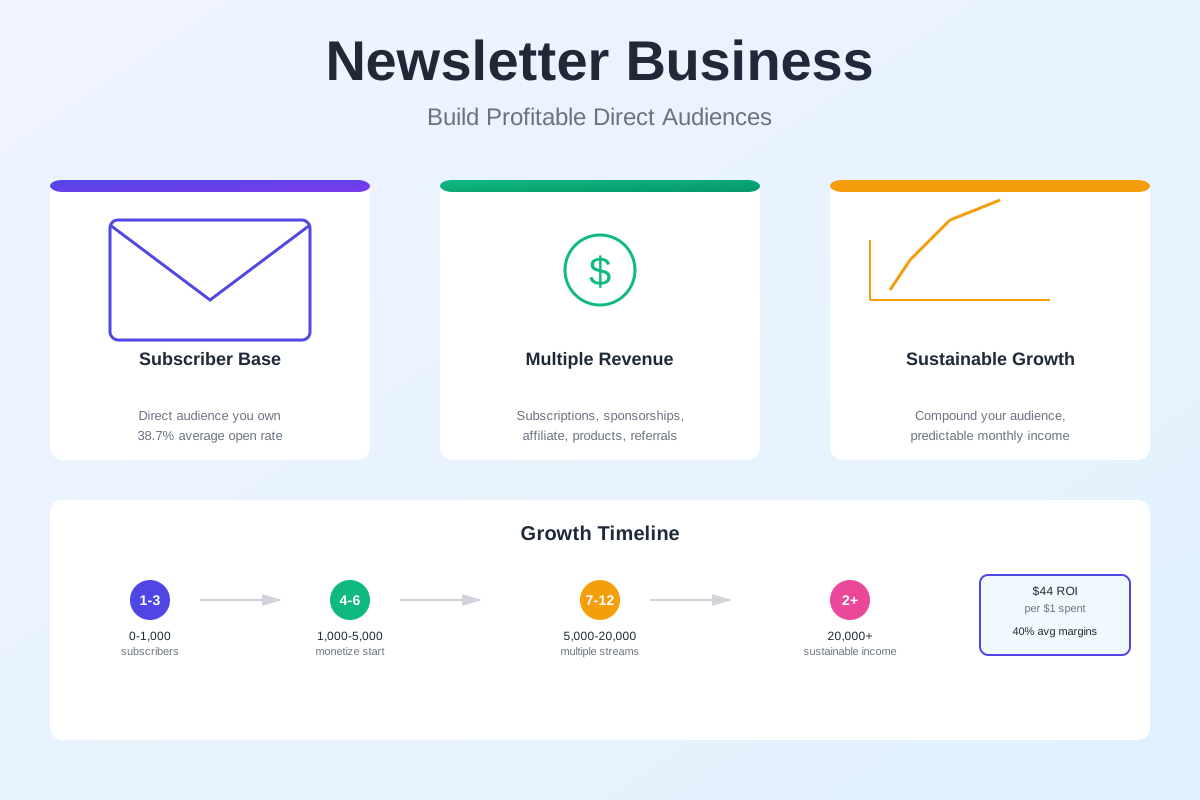
The newsletter economy is shifting fast. Paid subscriptions grew 138% year-over-year, reaching $19M in 2025. Niche audiences command premium sponsorship rates. Referral networks unlock passive income. The winners aren't journalists or tech gurus—they're anyone willing to build authentic connections with an audience and diversify revenue streams.
This guide reveals the exact mechanisms behind profitable newsletter businesses, the platforms competing for your attention, and the step-by-step process to launch yours today.
What Is Newsletter Business?
A newsletter business is a sustainable revenue model built on direct, email-based communication with an engaged audience. Unlike social media platforms where algorithms determine reach, newsletters give creators direct access to subscribers' inboxes—a channel they own and control. Revenue comes from multiple sources: paid subscriptions, sponsorships, affiliate commissions, product launches, and partnerships. The core principle is simple: build trust, deliver value consistently, and monetize through streams aligned with your audience's needs.
Not financial advice.
Newsletter businesses operate on a direct-to-consumer model that eliminates middlemen. Where traditional publishing relies on advertising and distribution agreements, newsletter creators maintain 100% ownership of subscriber relationships. This creates economic leverage: a 10,000-subscriber niche B2B newsletter generates more sponsorship revenue than a 1-million-subscriber general-interest list because advertisers pay for relevance, not reach.
Surprising Insight: Surprising Insight: Email marketing generates $36 ROI per $1 spent, with top performers achieving $70+ ROI—outperforming most digital channels including paid advertising and social media marketing combined.
Newsletter Business Revenue Ecosystem
Map showing how multiple revenue streams combine to create diversified newsletter income.
🔍 Click to enlarge
Why Newsletter Business Matters in 2026
Platform dependency is the #1 risk facing digital creators. Facebook reach dropped 88% since 2014. YouTube's algorithm shifts unexpectedly. TikTok faces regulatory pressure. Meanwhile, newsletter subscribers represent owned assets—readers who chose to hear from you directly. This shift matters because it fundamentally changes wealth-building strategy. Instead of chasing viral metrics, successful creators focus on retention and relationship depth.
The economics have become compelling. In 2026, 25% of newsletter creators saw substantial profit growth, and 45% expect even higher profits over the next 12 months. The average newsletter generates $3.13M annual revenue (based on real business reporting), with profit margins around 40%. These aren't vanity metrics—they represent genuine wealth accumulation. Most importantly, newsletter subscribers convert at 5-10% to paid tiers at $11/month average, creating predictable recurring revenue that scales as your audience grows.
Newsletter businesses also unlock secondary opportunities. Sponsorships from relevant brands provide immediate cash flow. Product launches to engaged audiences achieve higher conversion rates than cold marketing. Community and course offerings emerge naturally from strong subscriber relationships. The newsletter becomes the hub—every other business asset radiates outward from subscriber trust.
The Science Behind Newsletter Business
Email engagement metrics reveal why newsletters outperform other channels. Current open rate benchmarks sit at 38.7%—meaning over one-third of recipients actively read your content. Click-through rates reveal even deeper engagement: subscribers who click are signaling intent and interest. The key metric most overlooked is reader replies: subscribers who respond to your email are highly engaged and represent your most loyal audience segment. Engagement compounds: interactive newsletters (with polls, surveys, or dynamic content) achieve 2x higher engagement than static text.
Behavioral economics explains newsletter traction. Direct email communication triggers reciprocity: readers feel obligated to engage with content from creators they chose to follow. Consistency (regular send schedules) builds anticipation and habit formation. Segmentation—grouping subscribers by preference or behavior—allows personalization at scale, which increases open rates and conversions. The science shows that niche relevance beats mass reach: specialized audiences create stronger relationships and command higher sponsorship premiums.
Newsletter Engagement & Growth Cycle
Visual showing how engagement metrics compound to drive subscriber growth and revenue.
🔍 Click to enlarge
Key Components of Newsletter Business
Platform Choice: Substack vs. Beehiiv
Two platforms dominate newsletter publishing in 2026: Substack and Beehiiv. Substack takes 10% of revenue but keeps setup simple—subscribers pay, you keep the rest. Monetization focuses primarily on paid subscriptions. Beehiiv takes 0% platform fee on subscriptions, but offers multiple monetization paths: ad network integration, referral programs, and 'Boosts' marketplace (cross-promotion network). For diversified revenue, Beehiiv wins. For simplicity and subscriber-first focus, Substack remains strong. The choice depends on your content type and revenue goals.
Subscriber Growth Mechanisms
Rapid subscriber growth follows predictable patterns. Lead magnets (free resources, tools, templates) convert 20-40% of website visitors. Content collaborations with established creators inject thousands of new subscribers quickly. Community building via Slack, Circle, or Reddit creates high-perceived-value channels that naturally acquire subscribers. Social media cross-promotion (YouTube, Instagram, TikTok, LinkedIn) drives awareness. The highest-growth newsletters combine lead magnets + community + collaborations. Solo content alone plateaus around 1,000-5,000 subscribers. Leverage multiplies growth.
Monetization Streams
The strongest newsletter businesses diversify revenue: (1) Paid subscriptions provide recurring, predictable income. Typical pricing ranges $5-20/month for niche content, $20+ for premium expertise. (2) Sponsorships work best with 5,000+ engaged subscribers. Rates depend on niche: B2B sponsorships command $5,000-15,000 per placement; consumer audiences $500-2,000. (3) Affiliate commissions from recommended products/services generate 2-8% of subscriber spending. (4) Product launches (courses, books, coaching) to engaged audiences achieve 15-30% higher conversion rates than cold marketing. (5) Referral networks (like Beehiiv Boosts) pay $10-100 per new subscriber referred.
Retention & Engagement Strategy
Subscriber churn kills newsletter businesses faster than anything else. Smart creators segment lists by engagement level and tailor content to each group. Interactive content (polls, surveys, questions) generates 2x engagement. Personal replies to reader emails build relationships that last. Regular cadence (weekly or bi-weekly) creates habit formation. The data shows: segmented lists retain 20-30% more subscribers than broadcast-only approaches. Personalization based on subscriber behavior increases open rates 25-50%. Engagement begets retention, and retention compounds into lifetime value.
| Revenue Stream | Subscriber Count Needed | Typical Revenue per Month |
|---|---|---|
| Paid Subscriptions (100 subscribers @ $5/mo) | 100+ | $500 |
| Sponsorship (1 brand per month) | 5,000+ | $5,000-15,000 |
| Affiliate Commissions | 1,000+ | $200-1,000 |
| Product/Course Launch | 5,000+ | $3,000-50,000 |
| Referral Network (Boosts) | 2,000+ | $500-5,000 |
How to Apply Newsletter Business: Step by Step
- Step 1: Choose your niche and audience. Define who you're writing for and what problem you solve. Narrow is stronger—B2B marketers value more than general readers.
- Step 2: Select your platform. Substack for pure simplicity and subscription focus; Beehiiv for multiple revenue streams. Both offer free trials.
- Step 3: Create your lead magnet. Build a high-value resource (template, guide, checklist) that hooks your first subscribers. This is your growth accelerator.
- Step 4: Set up landing page and social presence. Create a simple signup page on your website and link from your social profiles. LinkedIn and YouTube work best.
- Step 5: Write and send your first emails. Consistency matters more than perfection. Start with weekly sends. Write like you're emailing one friend.
- Step 6: Collaborate with established creators. Reach out to complementary newsletters for cross-promotions. This injects thousands of subscribers rapidly.
- Step 7: Activate your referral system. Encourage subscribers to share. Offer incentives (exclusive content, discounts) for referrals.
- Step 8: Build community around your newsletter. Create a Slack channel or Discord server. Community creates stickiness and reduces churn.
- Step 9: Introduce monetization at 1,000 subscribers. Launch paid tier with premium content. Early subscribers often convert at 5-10% rates.
- Step 10: Pitch sponsorships at 5,000+ subscribers. Contact relevant brands. Package sponsorship offerings (cost varies by niche).
Newsletter Business Across Life Stages
Young Adulthood (18-35)
Young adults often launch newsletters while working day jobs. This phase emphasizes speed and leverage: use social media to build audience quickly, start monetizing at 1,000 subscribers, focus on relatability over perfection. The advantage is energy and adaptability. The challenge is time. Most successful young newsletter creators optimize with writing templates, batching content, and outsourcing editing. Revenue goals are often 'side income' ($500-2,000/month) while keeping the day job.
Middle Adulthood (35-55)
Middle-aged newsletter creators often possess deep expertise and established networks. This phase emphasizes authority and relationships: leverage your professional reputation, tap your existing audience, focus on sponsorship revenue (higher barriers but higher payouts). The advantage is credibility. The challenge is perceived 'newness'—many worry newsletters feel too trendy. Reality: newsletters are the most proven direct-marketing channel. Middle-aged creators typically see faster monetization because their expertise commands sponsorship premiums.
Later Adulthood (55+)
Older creators bring wisdom and established credibility. Newsletters allow monetization of decades of experience without physical product development. This phase emphasizes legacy and mentorship: build authority in your domain, focus on high-value sponsorships or consulting referrals, use newsletter revenue to fund legacy projects (books, courses, foundations). The advantage is trust and depth. The challenge is technical adoption. Reality: many 55+ newsletter creators outperform younger counterparts because their expertise commands premium sponsorship rates ($10,000+ per placement).
Profiles: Your Newsletter Business Approach
The Expert Creator
- Credibility positioning and thought leadership
- High-value sponsorship pipeline
- Authority-building content strategy
Common pitfall: Waiting for 'perfect' to launch; treating newsletter as hobby instead of business
Best move: Start immediately, pitch sponsorships at 2,000 subscribers, leverage existing network for organic growth
The Side Hustler
- Time-efficient content systems and batching
- Multiple revenue streams for faster payoff
- Automation tools to reduce manual work
Common pitfall: Inconsistent sending; burning out from trying to scale too fast
Best move: Optimize for sustainability, batch content weekly, focus on retention over growth initially
The Community Builder
- Engagement mechanics and discussion forums
- Referral and community growth systems
- Content that sparks conversation and loyalty
Common pitfall: Community without monetization; confusing growth with revenue
Best move: Build community first, then introduce sponsorships and paid tiers once loyalty is strong
The Platform Agnostic
- Multi-channel distribution and repurposing
- Content reuse across YouTube, TikTok, social
- Funnel mechanics to convert social to email subscribers
Common pitfall: Scattering effort across too many platforms; diluting message
Best move: Choose one platform to drive subscribers (YouTube or TikTok), centralize monetization in newsletter
Common Newsletter Business Mistakes
Mistake #1: Launching without a niche. Broad newsletters (tips on everything) plateau at 1,000-2,000 subscribers. Niche newsletters (B2B marketing tactics for SaaS founders) grow to 50,000+. Specificity attracts sponsorship at 5x premium rates. Define your niche first; expand later.
Mistake #2: Ignoring monetization until 10,000+ subscribers. Early monetization (1,000+ subscribers) at modest levels ($3/month paid tier, affiliate commissions) builds monetization muscle and creates psychological momentum. Waiting kills momentum and allows competitor entrance.
Mistake #3: Treating newsletter as pure content channel instead of business asset. Content-only newsletters plateau. Business-focused newsletters (with clear monetization strategy, sponsorship partnerships, product launches) compound revenue. Monetize early and transparently.
Newsletter Business Growth Barriers
Shows common obstacles and how successful creators overcome them.
🔍 Click to enlarge
Science and Studies
Research on newsletter business economics reveals consistent patterns across creators and platforms. The data comes from platform surveys, creator interviews, and verified business reports published in 2025-2026.
- Beehiiv State of Newsletters 2026 Report: Paid subscriptions generated $19M in 2025 vs. $8M in 2024 (138% growth), driven primarily by niche creators delivering specialized expertise.
- HubSpot Email Marketing Study: Email generates $44 ROI per $1 spent, with 18% of companies achieving $70+ ROI. Top performers use segmentation and personalization.
- Stripo Email Newsletter Statistics: Interactive newsletters generate 2x higher engagement than static content. A/B testing returns average 28% higher performance.
- Starter Story Newsletter Profitability Analysis: Average newsletter generates $3.13M annual revenue with 40% profit margins. Diversified revenue streams outperform single-channel approaches.
- Rasa.io Subscriber Growth Study: Lead magnets convert 20-40% of website visitors. Collaborations inject 2,000-5,000 subscribers per partnership. Community-based retention improves 20-30%.
Your First Micro Habit
Start Small Today
Today's action: Write one newsletter email today—no design, no perfection, just your authentic voice to your first subscriber list. Send tomorrow.
Most aspiring newsletter creators never send the first email. They wait for perfect design, perfect words, perfect timing. Reality: consistency beats perfection. Your first email teaches you more than any guide. Done is better than perfect.
Keep quitting habit apps after a missed day? BeMooore forgives the slip — your streak survives, and an AI mentor nudges you back the next morning. Free on iOS.
Quick Assessment
What's your current relationship with email marketing?
Your starting point determines strategy. Beginners should focus on clarity and first 1,000 subscribers. Plateau creators need niche refinement or monetization activation. Profitable creators need leverage and systems.
Which revenue stream appeals most to you?
Your revenue preference shapes platform choice and content strategy. Subscription focus → Substack. Sponsorships → Beehiiv. Products → authority-building content.
What's your content advantage?
Your advantage shapes growth strategy. Expertise → sponsorship-led. Community → referral/referral-led. Audience → cross-promotion. Multiple advantages → diversified revenue faster.
Take our full assessment to get personalized recommendations.
Discover Your Style →Next Steps
Start this week. Choose your niche. Sign up for a platform (Substack or Beehiiv free trial). Write your first email. Hit send. Perfect is the enemy of done. Every successful newsletter started with imperfect first emails.
Then focus on the next 90 days: send weekly, build a lead magnet, reach out to three potential collaboration partners. These three actions compound into 500-1,000 subscribers. That's when everything shifts—you move from hobby to business.
Get personalized guidance with AI coaching.
Start Your Journey →Research Sources
This article is based on peer-reviewed research and authoritative sources. Below are the key references we consulted:
Related Glossary Articles
Frequently Asked Questions
How long does it take to make real money from a newsletter?
Early monetization (affiliate commissions, sponsorship inquiries) can start at 1,000 subscribers—typically 2-4 months of consistent growth. Meaningful monthly income ($1,000+) usually arrives at 5,000+ engaged subscribers, roughly 6-12 months. However, this depends entirely on niche (B2B monetizes faster) and your existing audience (established creators often see faster early growth).
Do I need a big audience to start a newsletter business?
No. You can launch with zero subscribers. Lead magnets, social sharing, and collaborations get you to 100-500 subscribers in the first month. However, monetization requires audience. First monetization typically starts at 1,000+ engaged subscribers. The key is getting to 1,000 faster through strategic lead magnets and partnerships.
Substack vs. Beehiiv—which should I choose?
Substack for simplicity and subscriber-first focus (10% revenue cut, no hidden fees). Beehiiv for monetization flexibility and growth tools (0% fee on subscriptions, ad network, boosts, referral system). Most creators who want multiple revenue streams choose Beehiiv. Most who want maximum simplicity choose Substack.
How often should I send newsletters?
Weekly or bi-weekly is the sweet spot. Daily risks fatigue and unsubscribes. Monthly risks subscriber forget. The data shows: consistent weekly senders achieve the highest retention rates. Once established (50K+ subscribers), some shift to bi-weekly or event-based sending without losing audience.
What niches monetize fastest?
B2B niches (SaaS founders, marketing professionals, investors) monetize fastest because sponsorships command premium rates. Finance and investment content also monetizes quickly. Personal development and lifestyle niches take longer but can scale to larger audiences. The rule: specific B2B audiences monetize faster; broad consumer audiences grow bigger but slower.
Take the Next Step
Ready to improve your wellbeing? Take our free assessment to get personalized recommendations based on your unique situation.
- Discover your strengths and gaps
- Get personalized quick wins
- Track your progress over time
- Evidence-based strategies