Limerence
You can't stop thinking about them. Every moment is consumed by fantasies about a life together, intrusive thoughts interrupt your day, and you analyze every text message for hidden meaning. Your heart races when they message, and despair crashes over you when they don't. This emotional rollercoaster isn't love—it's limerence. Coined by psychologist Dorothy Tennov in 1979, limerence describes the involuntary state of romantic obsession with another person, particularly when reciprocation is uncertain. Understanding limerence is crucial because it affects your wellbeing, decision-making, and genuine relationships. This article explores what limerence is, how it differs from true love, its neurobiological mechanisms, and evidence-based strategies to break free from romantic obsession.
Limerence typically lasts between 3 months to 4 years, though duration varies significantly based on individual factors and how often you encounter reminders of the person.
The good news: limerence is not permanent, and understanding its mechanisms gives you tools to shorten it and prevent future cycles.
What Is Limerence?
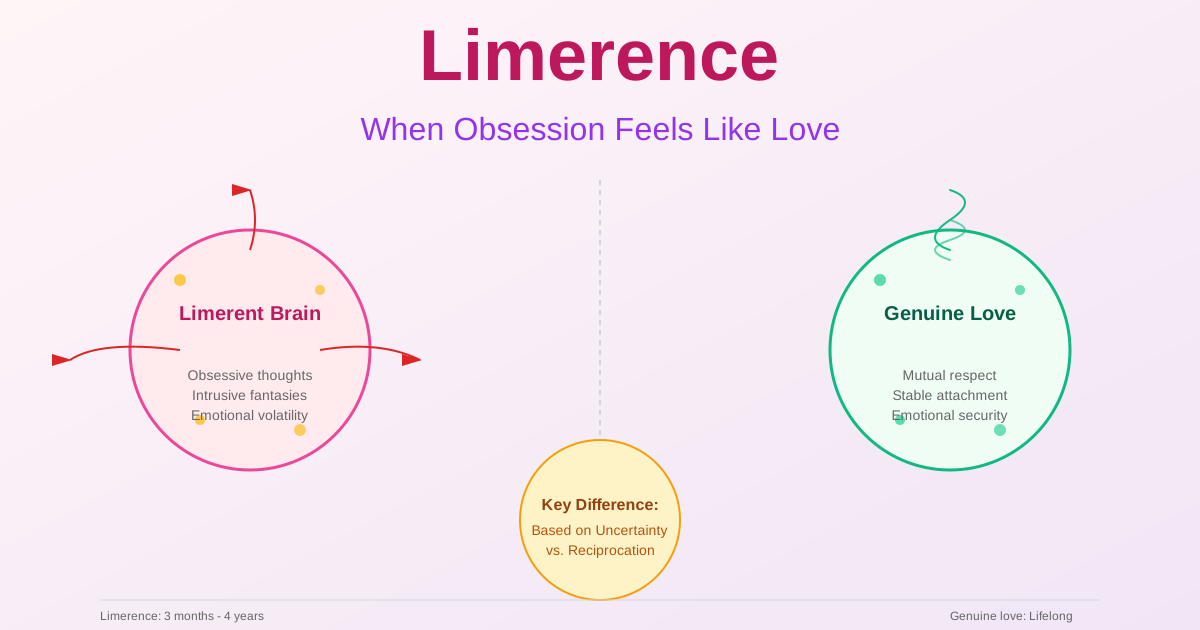
Limerence is an involuntary mental state of intense romantic longing for another person, characterized by obsessive thinking, emotional dependence, and idealization of the desired individual. The term was created by psychologist Dorothy Tennov after interviewing over 500 people about love and conducted extensive research on romantic attachment patterns. Tennov defined limerence as 'an uncontrollable, biologically determined, inherently irrational, instinct-like reaction.' Unlike love, which involves mutual respect and genuine concern for another's wellbeing, limerence is fundamentally self-focused and based on uncertainty. The key distinguishing feature is that limerent feelings depend entirely on whether you believe the other person might reciprocate your feelings.
Not medical advice.
Limerence creates a state where you idealize the person (a process called 'crystallization'), filtering out their flaws and magnifying their positive qualities. You fantasize extensively about their life, desires, and imagined future together. The emotional intensity comes from uncertainty—the not-knowing becomes addictive because your brain seeks resolution. Each tiny interaction becomes evidence: they smiled at you, they took 2 minutes to respond (not 3!), they liked your photo. This hypervigilance and interpretation of ambiguous signals keeps limerent thoughts alive.
Surprising Insight: Surprising Insight: People in limerence spend 85-100% of their waking thoughts on fantasies about the other person at peak intensity, compared to 65% for people in genuine love.
Limerence vs. Love: Core Differences
Visual comparison showing how limerence differs from genuine love across key dimensions
🔍 Click to enlarge
Why Limerence Matters in 2026
In our hyper-connected world, limerence has intensified. Social media provides constant access to the object of your affection through posts, stories, and photos—fueling obsessive checking behaviors and fantasy cycles. Dating apps create a culture of uncertainty where you're always wondering if someone will message back, making limerence more common and longer-lasting than in previous generations. Understanding limerence matters because it affects major life decisions: people sacrifice career opportunities, move to new cities, ignore red flags, or sabotage existing relationships while in a limerent state.
Research shows consistent correlations between limerence and anxiety, depression, and substance use. People experiencing limerence have higher rates of relationship trauma, abandonment fears, and anxious attachment patterns. If you struggle with limerence, you're likely dealing with underlying attachment wounds that deserve attention and healing. Recognizing limerence is the first step to protecting your mental health, making better decisions, and building authentic relationships based on genuine connection rather than fantasy.
Additionally, confusing limerence with love leads to poor relationship choices. Many people enter committed relationships while still experiencing limerence for someone else, or stay in unhealthy situations because they're limerent about a partner who doesn't respect them. Learning to distinguish limerence from love helps you make clearer decisions about who deserves your emotional energy and commitment.
The Science Behind Limerence
Neurobiologically, limerence is driven by dopamine, the brain's reward chemical. When you think about the limerent object, your brain releases dopamine into the nucleus accumbens and ventral tegmental area (VTA)—the same neural pathways activated by cocaine and other addictive substances. This dopamine reward loop explains why limerent fantasies feel so compelling and why you can't stop thinking about the person even when you want to. Your brain is literally seeking the dopamine hit, making limerence operate similarly to substance addiction. This is why 'just stopping' doesn't work—you're dealing with neurochemistry, not willpower.
In contrast, mature love is more associated with oxytocin and long-term bonding systems that promote calm and security rather than excitement and craving. Limerence is the brain's ancient courtship mechanism, useful for initiating attraction but terrible for sustainable relationships. The dopamine-driven state also impairs your prefrontal cortex—the part responsible for rational decision-making and impulse control—which explains why limerent people make choices they later regret. You literally cannot think clearly while limerent; your rational brain is offline.
Brain Chemistry: Limerence vs. Genuine Love
Illustration of dopamine-driven reward cycles in limerence versus oxytocin-based attachment in mature love
🔍 Click to enlarge
Key Components of Limerence
Intrusive Thoughts & Cognitive Obsession
Dorothy Tennov noted that 'limerence is first and foremost a condition of cognitive obsession.' People experience unwanted, repetitive thoughts about the limerent object that are difficult to control. Unlike normal reminiscing, these thoughts feel involuntary and consume significant mental energy. You might be at work and suddenly have a fantasy about running into them, or wake up at 3am thinking about something they said. Some people meet diagnostic criteria for obsessive-compulsive disorder due to these intrusive thoughts paired with compulsive rituals like checking their social media, analyzing text messages, or replaying conversations.
Crystallization & Idealization
Crystallization is the process where you filter out someone's negative qualities and magnify their positives, creating an unrealistic mental image. You might know intellectually that they have flaws, but these facts feel irrelevant to your emotional experience. This is why friends often see a limerent person's flaws clearly while the limerent person dismisses all concerns. You construct an idealized version of the person in your mind and fall in love with that fantasy, not the real human. When reality contradicts your fantasy (they cancel plans, they mention an ex, they're rude to a waiter), the dissonance creates anxiety and despair.
Uncertainty & Reciprocation Dependency
Limerence requires uncertainty to thrive. If someone clearly rejected you, limerence would fade. If they clearly loved you back, it would transform into genuine love or fade. But the ambiguous middle ground—where you don't know if they feel the same way—is the perfect breeding ground for limerent obsession. Each ambiguous signal becomes fodder for fantasy. This is why rejected people can maintain limerence for years, and why mutual clarity (whether positive or negative) typically ends limerence. The hope keeps you trapped.
Physical & Emotional Symptoms
Limerence produces recognizable physical symptoms: heart palpitations when they message, weakness in the knees when you see them, difficulty sleeping, loss of appetite or overeating, and a general feeling of disorientation. Emotionally, you experience intense joy when you perceive reciprocation and devastating despair when you don't. This emotional volatility is exhausting. Some people describe it as being on an emotional rollercoaster controlled by someone else's actions. Physical intimacy becomes intensely charged and meaningful, though often represents fantasy projection rather than genuine connection.
| Symptom | Limerence | Genuine Love |
|---|---|---|
| Basis | Uncertainty about reciprocation | Mutual care and commitment |
| Thinking about them | 85-100% of waking hours, intrusive | Frequent but not obsessive |
| View of person | Heavily idealized, flaws minimized | Realistic with acceptance |
| Emotional stability | Severe mood swings based on contact | Stable, secure attachment |
| Decision-making | Impaired, risky choices | Rational, considers long-term |
| Physical symptoms | Palpitations, weakness, insomnia | Calm presence, security |
How to Apply Limerence: Step by Step
- Step 1: Acknowledge what you're experiencing: Recognize that this is limerence, not love. This cognitive reframing alone reduces shame and helps you see the situation more clearly. You're not broken or weak—your brain is experiencing a temporary neurochemical state.
- Step 2: Reduce contact strategically: Eliminate access to reminders of the person. Block them on social media, avoid places they frequent, delete old messages and photos. Every interaction or reminder restarts the dopamine cycle. This is not punishment; it's protecting your healing.
- Step 3: Create physical distance: If possible, avoid being in the same location. Limerence thrives on proximity and chance encounters. Even a different floor at work or different coffee shop can help interrupt obsessive thoughts.
- Step 4: Challenge intrusive thoughts: When fantasies arise, pause and recognize them as your brain seeking dopamine, not reality. Practice cognitive distancing: 'I'm having a thought about them. This is just my limerent brain. This thought is not true.'
- Step 5: Spoil the reward: If you find yourself fantasizing about positive scenarios, deliberately introduce disappointment. Imagine the person rejecting you or showing you their worst qualities. This reduces the dopamine reward of daydreaming.
- Step 6: Rebuild your identity: Limerence thrives when you've lost yourself in someone else. Reconnect with hobbies, friendships, and goals that don't involve the other person. Invest time in becoming the best version of yourself independent of anyone else's validation.
- Step 7: Seek professional support if needed: Cognitive Behavioral Therapy (CBT) with exposure and response prevention (ERP) techniques is highly effective for obsessive thoughts. A therapist can help you address underlying attachment wounds that make you susceptible to limerence.
- Step 8: Address attachment patterns: If you repeatedly experience limerence, explore your childhood attachment history. Were you emotionally neglected? Did you learn to pursue unavailable people? Healing attachment wounds reduces your vulnerability to limerent cycles.
- Step 9: Move your body: Exercise releases endorphins and helps process the neurochemical dysregulation. Physical activity also interrupts obsessive thought patterns and improves mood without relying on fantasies.
- Step 10: Practice self-compassion: Healing limerence takes time. Expect setbacks and be gentle with yourself. Every day you maintain no-contact, every intrusive thought you don't act on, is progress toward freedom.
Limerence Across Life Stages
Young Adulthood (18-35)
Young adults are most vulnerable to limerence due to neurological development, social media connectivity, and identity formation. Your prefrontal cortex isn't fully developed until age 25, meaning impulse control and rational decision-making are compromised. Dating apps and social media provide constant access to potential limerent objects and their life updates. Many young adults mistake limerence for love and make major life decisions (moving, career changes) based on limerent feelings that will fade. The challenge is developing self-awareness early: learning to distinguish limerence from love, understanding your attachment style, and building resilience against obsessive thinking patterns before they derail your life.
Middle Adulthood (35-55)
Middle-aged adults often experience limerence during transitions: divorce, empty nest, or career changes. These vulnerable periods activate old attachment wounds and make people susceptible to limerent states. The advantage of middle age is cognitive maturity and perspective—you can often see through limerence more quickly. The challenge is that limerence during middle age can derail major life decisions and destabilize existing relationships or family structures. If you're experiencing limerence in this stage, recognize it as a signal that you may need to address underlying needs: loneliness, identity loss, desire for excitement, or unresolved attachment trauma. Use this as a signal to seek therapy and reconnect with yourself.
Later Adulthood (55+)
Older adults can experience limerence, though it's often complicated by life circumstances and previous romantic history. Some people have greater immunity to limerence due to decades of experience and perspective. Others find limerence particularly destabilizing when combined with health concerns, grief, or isolation. The advantage is wisdom: later-life limerence can be more easily recognized and managed. If you're experiencing obsessive romantic thoughts in later adulthood, consider whether loneliness or life transitions are driving this. This stage offers opportunity for intentional, authentic connection rather than limerent obsession.
Profiles: Your Limerence Approach
The Anxious Pursuer
- Certainty and reassurance about worth beyond another person's validation
- Strong social support network and friendships to distribute emotional energy
- Professional help addressing childhood abandonment or neglect patterns
Common pitfall: Pursuing contact to gain reassurance, which intensifies limerence and pushes the person away
Best move: Build a secure internal foundation through therapy and community. Your worth exists independent of reciprocation.
The Avoidant Fantasizer
- Permission to engage with people rather than remaining in safe fantasy worlds
- Exposure to emotional risk in small, manageable doses
- Understanding that vulnerability isn't weakness
Common pitfall: Using limerent fantasies to avoid real intimacy and maintain emotional distance
Best move: Recognize fantasy as a safe escape from real connection. Practice vulnerability gradually with trusted people.
The Passionate Romantic
- Channels for genuine romantic expression in reciprocal relationships
- Reality-testing when you start idealizing someone new
- Understanding the difference between limerence excitement and sustainable love
Common pitfall: Confusing limerence intensity with true love and making major commitments too quickly
Best move: Date with intention. Give relationships time to show stability before major decisions. Trust the calm feeling of genuine love.
The Pattern Repeater
- Deep work on attachment patterns and why you're drawn to unavailable people
- Understanding of what need limerence is meeting that real relationships should meet
- Clear identification of red flags you've historically ignored while limerent
Common pitfall: Repeating the same limerent cycle with different people, never learning the underlying pattern
Best move: Work with a therapist on attachment history. Break the cycle by choosing secure, available partners consistently.
Common Limerence Mistakes
The biggest mistake is acting on limerent feelings as if they represent truth. People confess their feelings, pursue the person, or end other relationships based on limerence, then feel devastated when the intensity fades and they realize they made a poor choice. If you're experiencing limerence, do not make major life decisions. Do not confess your feelings hoping it will 'resolve' the situation. Do not contact the person to 'clarify things.' These actions typically intensify limerence rather than ending it.
Another critical mistake is seeking reassurance from the limerent object. You might reach out, hoping they'll confirm they feel the same way and resolve your uncertainty. This actually extends limerence because it provides intermittent reinforcement—sometimes they respond warmly (dopamine!), sometimes they don't (uncertainty continues). The on-and-off contact pattern is identical to how slot machines addict people. Breaking contact completely is crucial.
Many people also fail to address the underlying attachment issues driving their limerence susceptibility. If you haven't worked on your attachment style and childhood wounds, you'll likely experience limerence repeatedly with different people. Each cycle feels new, but you're running the same pattern. Therapy addressing root causes is the most effective long-term prevention.
The Limerence Trap: How Contact Reinforces Obsession
Shows how intermittent contact creates dopamine reinforcement loops that extend limerence
🔍 Click to enlarge
Science and Studies
Dorothy Tennov's foundational work remains the most comprehensive study of limerence, though modern neuroscience has added crucial understanding of the brain mechanisms involved. Recent research has explored limerence as a distinct psychological state separate from love, obsessive-compulsive disorder, and substance addiction, though sharing features with all three. Contemporary researchers like Frank Tallis and James Wakin have expanded Tennov's work to develop clinical interventions.
- Tennov, D. (1979). Love and Limerence: The Experience of Being in Love. Stein and Day. Foundational research defining limerence through interviews with 500+ participants.
- Treatment of Limerence Using a Cognitive Behavioral Approach (2022). PMC8641115. Demonstrates effectiveness of CBT and exposure/response prevention for managing limerent obsessions.
- Wakin, B. & Vo, D. (2013). Love-Variant: The Wakin-Vo I.D.R. Model. Sacred Heart University. Proposes limerence as distinct diagnostic condition with OCD and addiction parallels.
- Neuroimaging studies show heightened dopamine activity in ventral tegmental area and nucleus accumbens during limerent states, similar to substance addiction patterns.
- Research indicates limerence duration averages 18 months to 3 years, though varies from 3 months to 48+ months depending on individual factors and contact frequency.
Your First Micro Habit
Start Small Today
Today's action: When you notice a limerent thought today, pause and name it: 'This is limerence, not reality. This is my dopamine-seeking brain.' Then redirect your attention to something present: the texture of your coffee, sounds around you, or a different task.
Cognitive distance breaks the automatic thought-feeling-action loop. By naming limerence as a brain state rather than truth, you reduce its emotional power. This small pause creates space between the thought and your reaction, building control.
Keep quitting habit apps after a missed day? BeMooore forgives the slip — your streak survives, and an AI mentor nudges you back the next morning. Free on iOS.
Quick Assessment
How often do intrusive thoughts about someone consume your waking hours?
The frequency and intensity of intrusive thoughts indicates limerence severity. Options 3-4 suggest strong limerence requiring intervention and reduced contact.
How does your mood depend on their actions toward you?
High mood-dependence on the other person's behavior is a hallmark of limerence. True love is more emotionally stable because it's based on mutual, reciprocal care rather than uncertainty.
How do you view the other person's flaws?
Crystallization (idealization) is core to limerence. If you cannot see the person's real flaws or readily excuse them, you're likely limerent rather than genuinely in love.
Take our full assessment to get personalized recommendations.
Discover Your Style →Next Steps
Start by recognizing whether what you're experiencing is limerence or genuine love. Review the symptoms checklist and assessment questions. Be brutally honest with yourself about the obsessive nature of your thoughts and mood dependency. This clarity is your first tool for change.
If you identify limerence, implement no-contact immediately: block the person on social media, delete old messages, avoid places they frequent. Reduce reminders in your environment. Simultaneously, reconnect with your life: invest in friendships, hobbies, and personal growth. If obsessive thoughts are severe, seek professional help from a therapist trained in CBT or attachment-focused therapy. Work on understanding why you're vulnerable to limerence—what attachment wounds make you susceptible?
Get personalized guidance with AI coaching.
Start Your Journey →Research Sources
This article is based on peer-reviewed research and authoritative sources. Below are the key references we consulted:
Related Glossary Articles
Frequently Asked Questions
Can limerence turn into genuine love?
Sometimes. If the person reciprocates and the relationship develops genuine mutual care, limerence can transform into love. However, this requires the other person to be equally invested. More often, limerence fades entirely when uncertainty is resolved (either through rejection or sustained positive reciprocation). If you're limerent, don't count on transformation—focus on either gaining clarity about reciprocation or moving on.
How long does limerence actually last?
Research indicates limerence typically lasts 18 months to 3 years, though it can range from 3 months to 48+ months. Duration depends on: frequency of contact with the person, whether you get any positive reciprocation signals, your attachment style, and whether you actively work to reduce contact. Maintaining distance and no-contact significantly shortens limerence. Repeated contact and hope-building can extend it indefinitely.
Is limerence a mental disorder?
No, limerence itself is not a diagnosable disorder—it's a temporary psychological state that most people experience at some point. However, if limerent obsessions and compulsions cause significant distress and impairment in functioning, you might meet criteria for obsessive-compulsive disorder (OCD). Some limerent people also develop depression or anxiety. If limerence is severely affecting your wellbeing, seeking professional help is warranted.
Why do I keep experiencing limerence with unavailable people?
This pattern usually indicates an attachment wound from childhood. People with anxious attachment or abandonment trauma often unconsciously seek out unavailable partners because the uncertainty mirrors their early experience. Pursuing an unavailable person feels familiar and validates an unconscious belief that love requires suffering or earning. Therapy addressing attachment history is crucial for breaking this pattern.
Should I tell the person I'm limerent about how I feel?
Generally, no. Confessing limerent feelings often intensifies the obsession and complicates the other person's life. There are rare exceptions: if you have genuine relationship potential and mutual interest, clear communication is healthy. But if you're seeking confession to 'resolve' your uncertainty or hoping it will trigger reciprocation, this typically extends limerence. Work on reducing contact and addressing the obsession first.
Take the Next Step
Ready to improve your wellbeing? Take our free assessment to get personalized recommendations based on your unique situation.
- Discover your strengths and gaps
- Get personalized quick wins
- Track your progress over time
- Evidence-based strategies