Anxiety Management in 5 Minutes a Day
You do not need an hour. You do not need a retreat. Five minutes. That is enough to change your nervous system response. Most people overestimate what big changes require and underestimate what small consistent actions achieve.
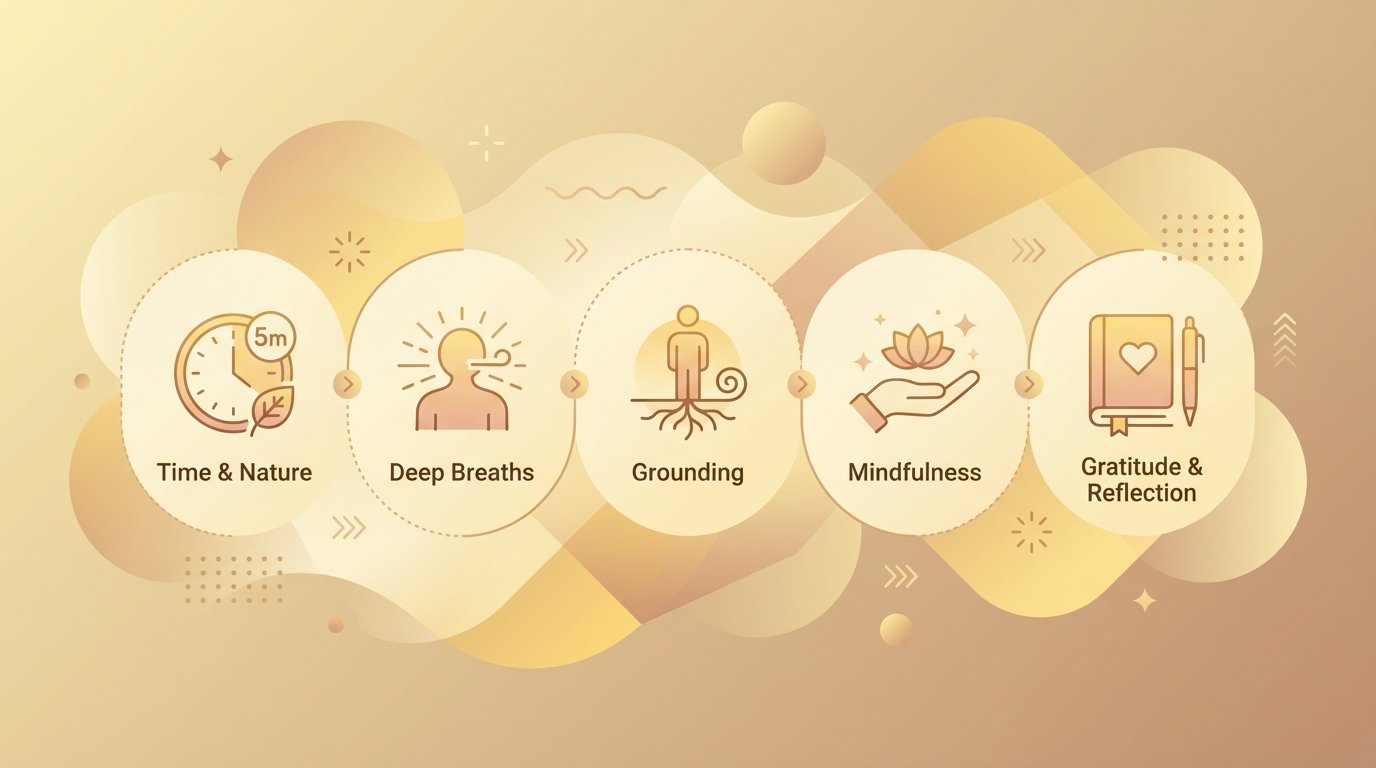
This guide gives you five techniques you can do anywhere. Each takes under five minutes. Combined, they create a foundation that transforms your relationship with anxiety. We will explore why brevity actually works better than marathon sessions.
Video: Quick Anxiety Relief Techniques
The Power of Micro-Practices
Surprising Insight: Surprising Insight: Five minutes of daily practice outperforms one hour weekly. Consistency reshapes your brain faster than intensity. See the Science section for the neuroscience.
Why 5 Minutes Works
Your nervous system responds to frequency, not duration. Brief daily activation of your calm response builds neural pathways faster than occasional long sessions. The key is showing up every day, not achieving perfection.
- Small habits are easier to maintain
- Daily practice builds stronger neural pathways
- Low time commitment removes excuse barriers
- Consistency matters more than intensity
- Brief practices fit any schedule
Standards and Context
Not medical advice.
5-Minute Daily Flow
A simple visual showing when to use each technique.
🔍 Click to enlarge
The Five 5-Minute Techniques
| Technique | Time | Best For | When to Use |
|---|---|---|---|
| Box Breathing | 2 min | Acute anxiety | Before stressful events |
| Body Scan | 3 min | Physical tension | Morning or evening |
| 5-4-3-2-1 Grounding | 2 min | Panic symptoms | When overwhelmed |
| Gratitude Practice | 2 min | Worry spirals | Morning routine |
| Worry Dump | 5 min | Racing thoughts | Before bed |
Required Tools and Resources
- Timer on your phone
- Quiet space (optional but helpful)
- Small notebook or notes app
- Consistent time slot each day
- Patience with yourself
How to Build Your 5-Minute Practice: Step by Step
- Step 1: Choose one technique to start (box breathing is easiest)
- Step 2: Pick a consistent time: after waking, before lunch, or before sleep
- Step 3: Set a daily reminder on your phone
- Step 4: Start with just 2 minutes if 5 feels too long
- Step 5: Track completion with a simple checkmark
- Step 6: After one week of consistency, add a second technique
- Step 7: Rotate techniques based on what you need that day
- Step 8: Notice patterns: what time works best for you?
- Step 9: Adjust your practice based on results
- Step 10: Celebrate streaks and restart gracefully after misses
Practice Playbook
Beginner: One Technique
Pick box breathing. Do it for 2 minutes each morning. That is it. Focus only on consistency for the first two weeks. Do not add anything until this is automatic.
Intermediate: Morning Routine
Combine box breathing (2 min) with gratitude practice (2 min) each morning. Total: 4 minutes. Add a quick body scan when tension appears during the day.
Advanced: Full Daily Practice
Morning: breathing and gratitude (4 min). Midday: grounding check-in (1 min). Evening: worry dump and body scan (5 min). Total: 10 minutes spread through the day.
Profiles and Personalization
Busy Professional
- Techniques during commute
- Calendar-blocked practice time
- Meeting transition rituals
Common pitfall: Skipping practice when busy
Best move: Attach practice to existing habits like morning coffee
Parent
- Techniques that work with interruptions
- Quick resets during chaos
- Modeling for children
Common pitfall: Putting everyone else first
Best move: 5 minutes before kids wake or after bedtime
Student
- Exam anxiety tools
- Focus techniques
- Energy management
Common pitfall: Only practicing during crisis
Best move: Build practice into study routine
Remote Worker
- Screen break practices
- Isolation anxiety tools
- Boundary setting rituals
Common pitfall: No separation between work and rest
Best move: Use practice to create transition moments
Night Owl
- Evening wind-down practices
- Sleep anxiety tools
- Morning flexibility
Common pitfall: Trying to force morning routine
Best move: Schedule practice for your natural high-energy time
Learning Styles
Visual Learners
- Watch 5-minute guided videos
- Use breathing apps with visual cues
- Create a practice tracking chart
Auditory Learners
- Use audio guides for breathing
- Listen to short calming tracks
- Set audio reminders
Kinesthetic Learners
- Focus on physical sensations
- Add gentle movement to practice
- Use tactile objects during breathing
Logical Learners
- Track data on anxiety levels
- Create a practice schedule
- Analyze which techniques work best
Emotional Learners
- Journal after practice
- Connect practice to values
- Notice emotional shifts
Science and Studies (2024-2025)
Brief daily mindfulness creates lasting brain changes
Neuroimaging shows that 10 minutes of daily practice for 8 weeks changes amygdala structure
Source →Breathing exercises activate parasympathetic nervous system
Slow breathing at 6 breaths per minute optimally stimulates vagus nerve and reduces cortisol
Source →Consistency beats duration for habit formation
Daily repetition regardless of length builds stronger habits than sporadic longer sessions
Source →Spiritual and Meaning Lens
Five minutes of stillness is a small offering to your wellbeing. Many traditions recognize that brief moments of presence hold great power. A few conscious breaths connect you to something larger than your worries. This is not about religious practice. It is about pausing the rush to remember what matters.
Positive Stories
The Nurse Who Found 5 Minutes
Setup: Maya worked 12-hour hospital shifts. She believed she had no time for self-care. Anxiety built until she dreaded going to work.
Turning point: She started doing box breathing during bathroom breaks. Just 2 minutes, twice a shift.
Result: Within a month, her baseline anxiety dropped. She felt more present with patients. Colleagues noticed she seemed calmer.
Takeaway: You do not find time. You make time. Even 2 minutes counts.
The Executive Who Simplified
Setup: Tom had tried meditation retreats, apps, and programs. Nothing stuck. He felt like a failure at managing stress.
Turning point: His therapist suggested forgetting everything fancy. Just breathe slowly for 3 minutes each morning. That is it.
Result: The simplicity worked. Three months later, it was automatic. His sleep improved. His team noticed he was more patient.
Takeaway: Simple and consistent beats complex and sporadic.
Microhabit
Morning Breath Anchor
Trigger: When your feet touch the floor in the morning
Action: Stay seated on bed edge, take 6 slow breaths (inhale 4s, exhale 6s)
Reward: Notice the calm settling in before the day begins
Frequency: Every morning
Fallback plan: If you forget, do it before your first sip of coffee
Quiz Bridge
When is your best time for a daily practice?
What usually stops you from practicing?
Which approach appeals to you most?
Author Bio
Next Steps
Ready to make 5 minutes transform your day? The Bemooore app guides you through quick daily practices with reminders, tracking, and personalized technique recommendations. Start your journey with the free quiz.
Start Now →Research Sources
This article is based on peer-reviewed research and authoritative sources. Below are the key references we consulted:
Related Glossary Articles
Frequently Asked Questions
Can 5 minutes really make a difference?
Yes. Neuroscience shows that brief consistent practice creates lasting brain changes. The key is daily repetition, not session length.
What if I miss a day?
Simply restart the next day. Missing one day does not erase progress. The goal is consistency over time, not perfection.
When is the best time to practice?
Whatever time you can do consistently. Morning works for many because it sets the tone for the day. But any consistent time is better than a perfect time you cannot maintain.
Should I use an app?
Apps can help with reminders and guidance, but they are not required. Simple techniques like box breathing work without any technology.
What if I feel more anxious during practice?
This sometimes happens initially. If discomfort is significant, try shorter sessions or a different technique. Consult a professional if it persists.
How long until I see results?
Many people notice subtle shifts within 1-2 weeks. Significant changes typically appear after 4-8 weeks of consistent daily practice.
Take the Next Step
Ready to improve your wellbeing? Take our free assessment to get personalized recommendations based on your unique situation.
- Discover your strengths and gaps
- Get personalized quick wins
- Track your progress over time
- Evidence-based strategies
About the Author
Keep quitting habit apps after a missed day? BeMooore forgives the slip — your streak survives, and an AI mentor nudges you back the next morning. Free on iOS.