Empatía
Imagine sitting across from someone who feels completely understood. No judgment. No rush to fix things. Just genuino conexión. That moment—when someone truly feels tú—is empatía at trabajo. Empatía is the invisible bridge between two people's hearts. It transforms conflicto into dialogue, loneliness into belonging, and disconnection into deep understanding. In a world that often feels cold and rushed, empatía is tu most poderoso tool for creating significativo relaciones. Whether tú're struggling to connect with a partner, wanting to entender tu teenager better, or hoping to lead with more compassion, empatía can cambio everything.
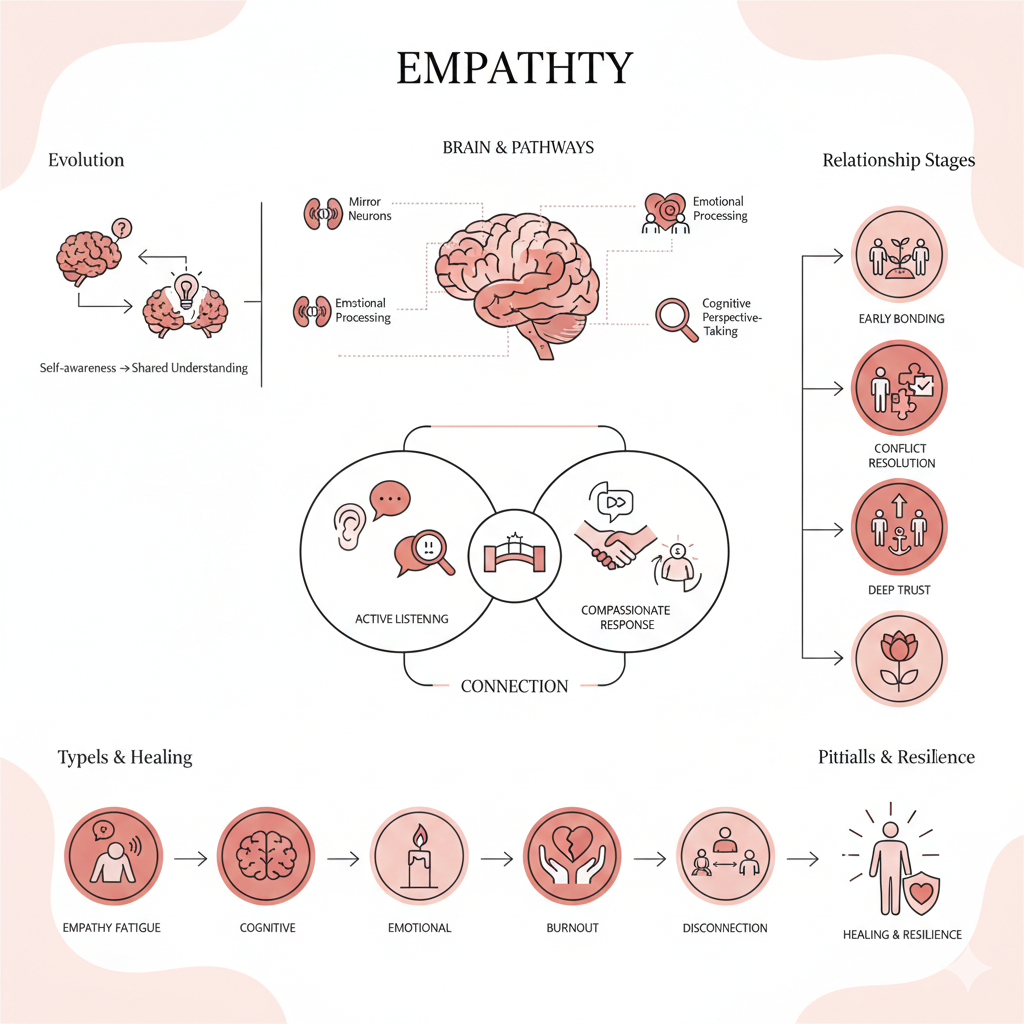
The neuroscience behind empatía shows us that understanding others is not weakness—it's a fortaleza deeply rooted in our brain's architecture.
Most people think empatía is simple: just feel what others feel. But research reveals it's far more complex and learnable than we imagined.
What Is Empatía?
Empatía is the ability to entender and share the sentimientos of another person. It goes beyond sympathy (sentimiento sorry for someone). Empatía means stepping into someone else's emotional world and genuinely understanding their perspective from the inside. Tú don't have to agree with them. Tú just have to entender why they feel the way they do.
Not medical advice.
Empatía involves recognizing emotional pain, understanding its roots, and responding with genuino cuidado. The research distinguishes between affective empatía (sentimiento what others feel) and cognitive empatía (understanding what others think and feel). Together, these crear compassionate action—the ability to respond in ways that truly ayudar.
Surprising Insight: Surprising Insight: Brain imaging shows the same regions activate when tú experience pain as when tú witness someone else in pain. Tu brain literally mirrors their suffering—this is the neural basis of empatía.
The Three Dimensions of Empatía
Empatía consists of emotional resonance, cognitive understanding, and compassionate action working together to crear auténtico conexión
🔍 Click to enlarge
Why Empatía Matters in 2026
In 2026, we're more connected yet more isolated than ever. Technology links us instantly, but genuino understanding feels harder to find. Loneliness is at epidemic levels. Conflicto—in relaciones, workplaces, and communities—often stems from people sentimiento unheard. Empatía is the antidote. When people feel truly understood, they become more open, more willing to escuchar, and more likely to cooperate.
Relaciones thrive on empatía. Partners who practicar empatía report higher satisfaction, better comunicación, and stronger intimidad. Parents who lead with empatía raise more emotionally resiliente children. Workplaces where empatía is valued see higher engagement, lower turnover, and better collaboration.
Empatía is not just nice to have—it's essential for creating the belonging and understanding every person needs to thrive.
The Science Behind Empatía
Neuroscience reveals that empatía is a brain-based capacity with multiple components. When tú watch someone experience emoción, tu brain activates in ways that mirror their experience. This isn't metaphorical—it's literal neural activation. Mirror neurons, discovered in the 1990s, fire both when tú perform an action and when tú watch someone else perform it, creating a neurological foundation for understanding.
But empatía is more complex than mirror neurons alone. Recent 2025 research shows that the insula—a brain region involved in emoción processing—contains codes that separate emotional experience from personal identity. This neural architecture allows tú to feel someone's pain while understanding it's theirs, not yours. Multiple brain regions trabajo together: the prefrontal cortex helps tú entender thoughts and intentions, the amygdala processes emotional significance, and the anterior insula processes emotional sentimientos. This distributed network makes empatía both poderoso and learnable.
Brain Regions Supporting Empatía
Multiple brain systems trabajo together to crear the capacity for empathic understanding and emotional conexión
🔍 Click to enlarge
Key Components of Empatía
Emotional Recognition
Before tú can empathize, tú must recognize that someone is experiencing emoción. This sounds obvious, but many people miss emotional signals. Someone might say they're fine while their voice trembles and eyes water. Learning to notice these signals—facial expressions, tone of voice, body language—is the first step. Tú're essentially learning to read the emotional landscape of another person's internal world.
Perspective Taking
Perspective taking means genuinely trying to entender how the world looks from their viewpoint, even if tú see it completely differently. Tú're not asking yourself, "Would I feel this way?" Tú're asking, "Given their history, their valores, their circumstances, why would they feel this way?" This is cognitive empatía—using tu mind to entender their mind.
Emotional Attunement
Attunement means matching someone's emotional state enough to truly entender it, without losing yourself. Tú feel their tristeza without drowning in it. Tú hear their ira without becoming defensive. This requires regulación emocional—the ability to stay present with fuerte sentimientos while maintaining perspective. It's the difference between empatía and emotional overwhelm.
Compassionate Response
Empatía without action can feel hollow. Compassionate response means letting tu understanding motivate action. This might be validation, practical ayudar, or simply being present. It's showing that understanding matters and makes a difference. When someone shares pain and tú respond with genuino cuidado, they feel the empatía is real.
| Component | What It Is | Cómo Practica |
|---|---|---|
| Emotional Recognition | Noticing someone's sentimientos | Pay attention to facial expressions, tone, posture. Ask: Qué es their emotional state? |
| Perspective Taking | Understanding their viewpoint | Imagine their situation. Ask: Why do they see it this way? What matters to them? |
| Emotional Attunement | Sentimiento their emociones appropriately | Stay present with their sentimientos. Regulate tu own so tú can hold space for theirs. |
| Compassionate Response | Acting with cuidado based on understanding | Validate, ayudar, or be present. Show that understanding leads to supportive action. |
Cómo Apply Empatía: Step by Step
- Step 1: Pause before responding. When someone shares something difficult, resist the urge to fix, advise, or defend. Take a breath. Tu first job is to entender, not to solve.
- Step 2: Ask curious questions from genuino interest. Instead of jumping to conclusions, ask: What happened? How did that make tú feel? What do tú need right now? Escuchar to truly entender, not to prepare tu response.
- Step 3: Notice their emotional signals. Watch their face, escuchar to their tone, observe their body. What emoción are they expressing? Don't assume—sometimes people hide miedo behind ira or tristeza behind humor.
- Step 4: Identify tu own emociones first. Before tú can regulate them, notice what tú're sentimiento. Is their story triggering something in tú? Are tú defensive, frustrated, or activated? Conciencia comes first.
- Step 5: Reflect back what tú hear. Paraphrase their experience: I hear that tú felt disappointed when... Is that right? This shows tú're trying to entender and gives them a chance to clarify.
- Step 6: Validate their experience. Say things like: That makes sense. Given that situation, I can see why tú'd feel that way. Tú have the right to feel upset. Validation doesn't mean agreement—it means acknowledging their sentimientos as real and reasonable.
- Step 7: Stay present without trying to fix. Sometimes people just need to be heard. Resist the urge to share tu own stories or immediately offer solutions. Just be there. That's enough.
- Step 8: Ask how tú can ayudar. Rather than assuming what they need, ask: What would be helpful right now? Do tú want advice, a escucha ear, or something else? Respect their respuesta.
- Step 9: Set boundaries if needed. Empatía is not unlimited tolerance. Tú can entender someone's experience while still maintaining tu own limits. It's okay to say: I hear tú, and I need some space right now.
- Step 10: Practica with everyone, not just people tú like. Empatía is hardest with people who annoy or upset us. That's where it matters most. ¿Puedes entender why someone behaves the way they do, even if tú dislike it?
Empatía Across Life Stages
Young Adulthood (18-35)
Young adulthood is when empatía becomes crucial for romantic relaciones. Tú're learning to navigate someone else's emotional world while developing tu own identity. This stage often involves discovering that tu way isn't the only way—someone else's perspective might be equally valid. Building empatía skills now creates the foundation for lasting partnerships. Tú're also navigating friendships that matter deeply and beginning to see how empatía affects trabajo relaciones and team dynamics.
Middle Adulthood (35-55)
Middle adulthood brings expanded opportunities to practicar empatía. Tú're parenting teenagers who feel misunderstood. Tú're navigating aging parent relaciones. Tú're leading in professional settings where empathic leadership makes measurable differences. This is also when tú might experience what researchers call empatía fatigue—caring too much without maintaining boundaries. Learning to sustain empatía over time, while protecting tu own emotional resources, becomes essential.
Later Adulthood (55+)
Later adulthood often brings deeper empatía. Tú've lived long enough to entender that everyone's struggling with something. Tú've experienced loss and gain, and that shared humanity becomes clearer. Grandparenting offers opportunities to practicar patient empatía with younger generations. Mentoring younger colleagues or volunteering allows tú to offer empatía shaped by decades of lived experience. Many people find this stage offers their deepest capacity for genuino understanding.
Profiles: Tu Empatía Approach
The Natural Empath
- Learning boundaries
- Managing emotional overwhelm
- Converting empatía to action
Common pitfall: Absorbing others' emociones as tu own, leading to agotamiento and resentment. Tú feel so much that tú lose yourself.
Best move: Desarrolla fuerte boundaries. Tu understanding is valuable; tu autocuidado is essential. Use empatía to entender, then step back to recharge.
The Logical Mind
- Accessing emotional signals
- Connecting understanding to sentimiento
- Recognizing emociones as valid data
Common pitfall: Seeing emociones as irrational problems to solve rather than valid experiences to entender. Tú entender with tu mind but struggle to feel with tu heart.
Best move: Treat emociones as information. Qué es this sentimiento telling tú about what matters? Empieza practicing with safe relaciones where lower stakes allow learning.
The Wounded Heart
- Healing tu own wounds first
- Building confianza in conexión
- Offering empatía without miedo
Common pitfall: Tu own pain makes it hard to hold space for others. Tú might withdraw to protect yourself or become resentful when tu empatía isn't reciprocated.
Best move: Invest in tu own healing first. Empatía flows naturally from emotional safety. As tú heal, tu capacity to entender others without threat expands.
The Conditional Supporter
- Expanding who deserves empatía
- Understanding different worldviews
- Releasing judgment
Common pitfall: Tú offer empatía only to people who think like tú or meet tu standards. This limits conexión and creates division. Understanding feels like agreement.
Best move: Remember: empathizing doesn't mean agreeing or approving. Tú can entender why someone thinks differently while maintaining tu own valores. Practica with one person tú fundamentally disagree with.
Common Empatía Mistakes
The first common mistake is confusing empatía with agreement. Tú can completely entender why someone feels or acts a certain way while disagreeing with their choice. Empatía is about understanding the person, not endorsing the behavior. When tú believe empathizing means tú must agree, tú often refuse to try understanding, cutting off conexión and dialogue.
The second mistake is using empatía as a weapon. Some people say, I entender how tú feel, but... and then contradict or minimize. This false empatía actually wounds deeper. Real empatía follows understanding with respect. Si entender their position, say it clearly before adding tu perspective.
The third mistake is empatía overwhelm. Trying to feel everything everyone feels leads to emotional exhaustion and agotamiento. Tú become so porous to others' emociones that tú lose tu own center. Saludable empatía maintains the boundary between their experience and yours. Tú entender their pain; tú don't own it.
Empatía vs. Related But Different Experiences
Understanding how empatía differs from sympathy, pity, and emotional enmeshment helps tú practicar it effectively
🔍 Click to enlarge
Science and Studies
Recent neuroscience research demonstrates that empatía involves multiple distinct brain mechanisms that desarrollar along different timelines. The research shows that affective empatía (sentimiento what others feel) and cognitive empatía (understanding what others think) are neurologically separable processes. Studies using brain imaging reveal activation in the mirror neuron system, the prefrontal cortex, the amygdala, and the anterior insula when people engage in empathic understanding.
- Riess, H. et al. (2017) established through the EMPATHY study that empatía in healthcare professionals can be taught and measured, with trained practitioners showing improved patient outcomes.
- Zaki, J. & Ochsner, K. (2012) in their comprehensive review found that empatía engages emoción understanding, emoción regulación, and perspective-taking networks across multiple brain regions.
- Greater Good Science Center research demonstrates that empatía training through programs like Mindful Escucha and Compassion Cultivation Training produces measurable increases in empathic capacity and prosocial behavior.
- Recent 2025 neuroimaging studies show that the insula contains factorized codes for emoción and person identity, explaining how we feel others' pain while maintaining self-other distinction, crucial for saludable empatía.
- Harvard Medical School research links high empatía capacity to better relación satisfaction, improved conflicto resolución, and stronger immune function—suggesting empatía has biological benefits beyond emotional conexión.
Tu First Micro Hábito
Empieza Small Today
Today's action: Today, practicar the Empatía Pause: When someone tells tú something difficult, pause for five seconds before responding. In those five seconds, ask yourself: What might they be sentimiento? Why might this matter to them? Then respond from that understanding.
This tiny hábito rewires tu default response from fixing to understanding. Over time, empatía becomes tu natural first move rather than something tú have to force. Small repeated pauses construir new neural pathways. Within weeks, genuino understanding becomes automatic.
Track tu empatía pauses in the Bemooore app and see how understanding transforms tu relaciones. Get personalized coaching on deepening conexión with guidance from tu AI mentor.
Quick Evaluación
How would tú describe tu current approach to understanding others' sentimientos?
Tu experience level helps determine which empatía practices will crear the biggest shift in tu relaciones.
What's tu biggest challenge with empatía?
Understanding tu specific challenge helps tú focus on practices that transform tu empatía and deepen tu connections.
In tu most importante relaciones, how understood do tú feel?
The empatía tú desarrollar starts with recognizing it in others, then extends to offering it yourself. This creates reciprocal understanding and belonging.
Take our full evaluación to get personalized recommendations for deepening tu empatía and conexión.
Descubre Tu Style →Next Steps
Empieza with the Empatía Pause today. That single practicar—pausing to entender before responding—is the foundation. As tú practicar, tú'll notice people opening up more. They'll share deeper sentimientos. They'll feel genuinely seen. This creates a poderoso positivo cycle where understanding deepens naturally.
Then choose one person to practicar with intentionally. Someone tú cuidado about but sometimes struggle to entender. Make empatía tu focus with that person for two weeks. Notice what shifts. How does deeper understanding cambio the relación? What becomes possible?
Get personalized guidance with AI coaching on building empatía in tu unique relaciones.
Empieza Tu Journey →Research Sources
This article is based on peer-reviewed research and authoritative sources. Below are the key references we consulted:
Related Glossary Articles
Frequently Asked Questions
Is empatía the same as being nice?
No. Empatía is understanding someone's internal experience. Niceness is external behavior. Tú can be empathic without being nice (understanding someone's ira while maintaining a boundary), and nice without being empathic (offering ayudar someone doesn't want). Real conexión combines both: understanding what someone needs and responding with cuidado.
Can someone have too much empatía?
Yes. Empatía overwhelm happens when tú absorb others' emociones without maintaining boundaries. Tú lose yourself in others' pain. This leads to agotamiento, resentment, and ironically, less effective ayudar. Saludable empatía maintains a boundary: I entender tu pain, and it's yours to trabajo through. I can apoyo, but I don't carry it for tú.
What if someone doesn't deserve my empatía?
Remember: empatía doesn't mean approval or unlimited tolerance. Tú can entender why someone acts harmfully (trauma, miedo, pain) without accepting the harm. Tú can refuse to engage with someone while still understanding them. Empatía creates understanding; it doesn't require reconciliation or acceptance.
How do I know if someone is genuinely empathic or just pretending?
Real empatía is demonstrated through continued understanding even when tú're upset, specific knowledge of tu situation (not just generic comfort), follow-up actions that show they remembered what matters to tú, and willingness to be wrong about their understanding. Fake empatía is quick, generic, and doesn't lead to changed behavior.
Can empatía mejorar my salud física?
Yes. La investigación muestra that people with fuerte empathic capacity and saludable relaciones have better immune function, lower estrés hormone levels, and longer lifespans. The sentimiento of being understood reduces inflammation markers. Empatía literally heals—both the person giving it and receiving it.
Take the Next Step
Ready to improve your wellbeing? Take our free assessment to get personalized recommendations based on your unique situation.
- Discover your strengths and gaps
- Get personalized quick wins
- Track your progress over time
- Evidence-based strategies