Digital Garden
Imagine your mind as a living garden. Like a physical garden, your thoughts, ideas, and knowledge need nurturing, organization, and intentional growth. A digital garden is exactly this metaphor made real—a personal knowledge system where you cultivate ideas over time, connecting them in meaningful ways, letting them grow as you learn and evolve. Unlike a traditional blog or note-taking app that publishes finished thoughts, a digital garden embraces the messy, ongoing process of thinking. It's where your half-formed ideas, research notes, and developing thoughts live alongside polished insights. This approach to knowledge management transforms how you learn, remember, and make sense of the world around you.
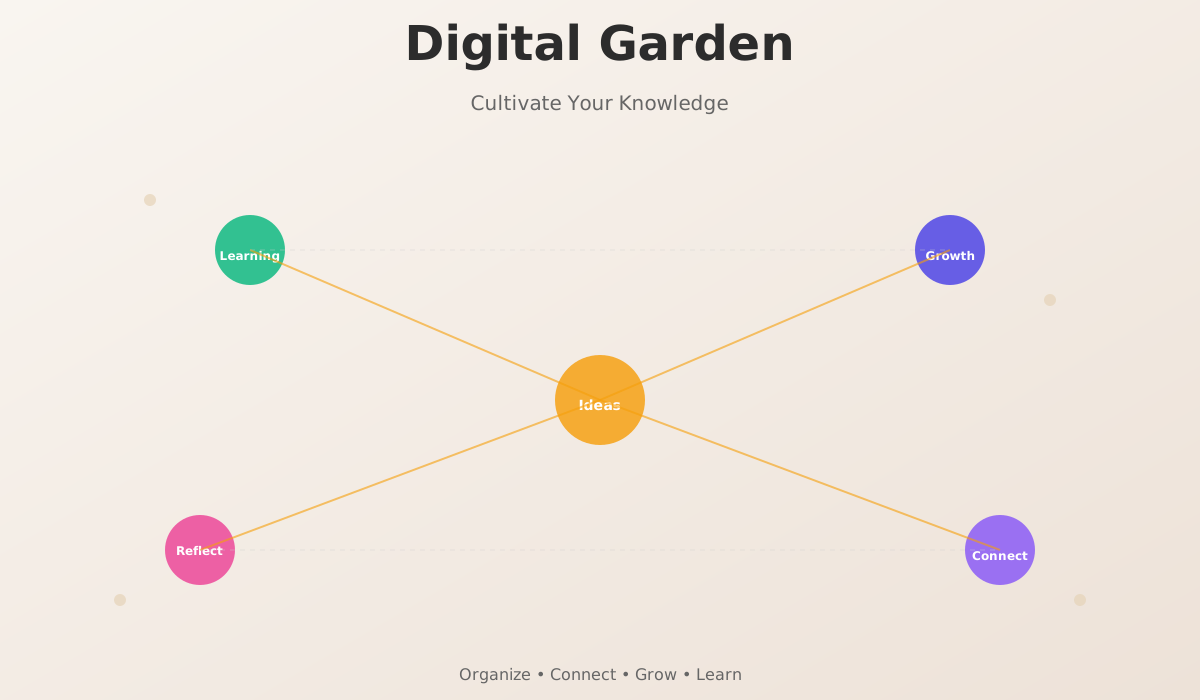
Your digital garden becomes a reflection of your intellectual journey. It tracks the growth of your understanding across <a href="/g/personal-growth.html">personal growth</a>, <a href="/g/self-compassion.html">self-reflection</a>, and <a href="/g/mindfulness.html">personal understanding</a>. The connections you make between ideas mirror how your brain actually works—through association and context.
Building and maintaining a digital garden brings surprisingly deep satisfaction. It provides structure to your thinking process, reduces cognitive load, and creates a tangible record of your growth. This article explores why digital gardens matter, how to build one, and how this practice transforms your relationship with learning and happiness.
Surprising Insight: Surprising Insight: The most valuable digital garden isn't a perfectly organized system—it's an imperfect one that you actually use and tend regularly. Consistency matters more than perfection.
The Digital Garden Ecosystem
Shows how digital gardens connect different knowledge management layers from raw notes to published insights.
🔍 Click to enlarge
Why Digital Garden Matters in 2026
Information overload has become the default state of modern life. We consume thousands of pieces of content daily through social media, news, podcasts, and articles. Without a system to organize, process, and synthesize this information, it flows through our minds leaving little lasting impact. A digital garden solves this by providing a framework for intentional learning. Instead of passively consuming, you become an active curator of your own knowledge. This shift from consumer to creator significantly impacts your sense of life satisfaction and personal empowerment.
The practice of building a digital garden also improves retention. When you write notes in your own words, connect them to existing knowledge, and regularly review them, you move information from short-term memory into long-term understanding. This evidence-backed learning principle works through regular review and consolidation. Your digital garden naturally implements this through ongoing curation and linking.
Perhaps most importantly, digital gardens combat the anxiety of forgotten knowledge. You've probably experienced the frustration of learning something valuable, then completely forgetting it months later. A digital garden becomes your extended memory, a trusted system where everything you've learned remains accessible and useful. This psychological safety—knowing your knowledge is preserved—reduces cognitive stress and enables you to focus on deeper learning and meaningful growth.
The Science Behind Digital Garden
The effectiveness of digital gardens is rooted in cognitive science research on learning and memory. The brain doesn't store knowledge as isolated facts. Instead, it creates vast networks of connected information where meaning emerges from relationships between concepts. This is why the associative index in your digital garden—the connections between notes—is more valuable than the notes themselves. When you write that Idea A connects to Ideas B and C, you're essentially rewiring your brain to recognize these relationships. This process is called elaboration, and it's fundamental to deep learning. Each connection you make strengthens your understanding of all three concepts simultaneously.
Research on learning shows that information becomes memorable when you interact with it multiple times in different ways. A digital garden naturally creates these repeated interactions. You might first encounter an idea in an article, add it to your garden, then weeks later discover how it relates to another concept, triggering a review. This repeated engagement without forced cramming is exactly what neuroscience tells us works best for long-term retention. The tendency to forget information over time is actively counteracted by the review and linking process inherent in maintaining a garden.
How Your Brain Learns Through Connected Ideas
Illustrates neural pathway formation when ideas are connected and reviewed over time.
🔍 Click to enlarge
Key Components of Digital Garden
Nodes: The Building Blocks
Nodes are individual pieces of content in your digital garden—a note about an idea, a quote from a book, a snippet of your own thinking, a definition. Each node should be atomic, meaning it focuses on a single idea or concept. This atomicity makes nodes more useful because they can be linked in many different combinations. A node isn't a long essay; it's focused enough to understand quickly but complete enough to stand alone. Think of nodes as seeds in your garden—individual plants that will eventually connect to create a larger ecosystem.
Links: The Relationships
Links are the connections between nodes that create the true power of a digital garden. A link isn't just a reference to another note; it's a statement about how two ideas relate. When you link a node about mindfulness to one about stress reduction, you're saying these concepts are meaningfully connected. You might even add context: "Mindfulness reduces stress by anchoring attention to the present moment." The bidirectional nature of these links—where both sides acknowledge the relationship—creates the web structure that makes your garden alive and navigable.
Cultivation: The Ongoing Process
Like a real garden, a digital garden requires regular tending. Cultivation means reviewing old notes, adding new connections as you learn, refining unclear thinking, and removing dead ideas. This isn't a burden—it's actually meditative. Many people find that a weekly 15-minute review of their garden is deeply satisfying. You see how your understanding has evolved, recognize patterns in your learning, and feel the tangible growth of your knowledge system. This regular engagement mirrors the benefits of thoughtful practice and mindful reflection.
Tools and Infrastructure
Many tools support digital garden building: Obsidian, Roam Research, LogSeq, and even simple markdown files with a static site generator. The tool matters less than the practice. What matters is having a system where linking is easy, searching is fast, and the interface doesn't get in the way of thinking. Some people use minimalist plain text systems, others use sophisticated graphing tools. The best tool is the one you'll actually use consistently. The infrastructure should be transparent—you're focused on your ideas, not the technology.
| Tool | Best For | Key Feature |
|---|---|---|
| Obsidian | Local-first note-takers | Strong linking, graph view, plugins |
| Roam Research | Fast thinking capture | Bi-directional links, daily notes |
| LogSeq | Outline-focused learners | Outliner interface, block references |
| Markdown + GitHub | Developers and minimalists | Version control, simple, flexible |
How to Apply Digital Garden: Step by Step
- Step 1: Choose your platform: Pick a tool that resonates with you—whether it's Obsidian, pen and paper, or a simple folder of markdown files. Don't overthink this; any tool works if you'll use it.
- Step 2: Create your first node: Write about a topic you're genuinely curious about. Don't aim for perfection; aim for clarity. Explain the concept as if teaching it to someone with no background.
- Step 3: Establish a capture process: Decide how ideas will enter your garden. Will you screenshot interesting quotes? Write reflections after reading? Record voice memos? Make capture easy.
- Step 4: Start linking: As you add new nodes, look for connections to existing ones. Even two notes forming a connection creates momentum. These links are the real value.
- Step 5: Set up a regular review: Schedule a weekly 15-minute review of your garden. You might randomly explore sections or focus on one topic. This regular engagement transforms passive collection into active learning.
- Step 6: Create index nodes: Build overview notes that synthesize multiple smaller notes. For example, create a 'Happiness Practices' node that connects to 10 specific practices you're tracking.
- Step 7: Experiment with structure: Try different organizational methods—by topic, by time period, by learning source. Find what helps you think, not what looks nice.
- Step 8: Add context to links: Don't just link; explain why things connect. This context becomes invaluable when you review your notes months later.
- Step 9: Embrace incompleteness: Your garden will always feel incomplete. That's healthy. It means you're still learning and growing. Perfection is the enemy of progress.
- Step 10: Share selectively: Consider publishing some of your garden publicly. Sharing forces clarity and creates accountability, while also potentially helping others think alongside you.
Digital Garden Across Life Stages
Young Adulthood (18-35)
In your 20s and early 30s, a digital garden becomes a repository for your emerging identity and values. This is the time when you're exposed to countless new ideas—in school, work, reading, conversations. A garden helps you integrate these ideas into a coherent worldview. Young adults often use digital gardens for learning new skills, tracking skill development, and exploring their direction. The garden becomes a thinking partner as you make major life decisions. Many young adults find that reviewing their garden reveals how much they've grown and learned in just months.
Middle Adulthood (35-55)
In middle adulthood, digital gardens often become more refined and focused. You've narrowed your interests, deepened your expertise in certain domains, and become clearer about what matters to you. A garden at this stage might contain deep explorations of your professional field, personal philosophy, and accumulated insights. Many middle-aged people find that their garden becomes a source of confidence—they can trace how their understanding has deepened, how they've solved complex problems, and how they've developed expertise. The garden becomes less about exploration and more about synthesis and depth.
Later Adulthood (55+)
In later adulthood, digital gardens become powerful tools for legacy building and meaning-making. They're places to capture your accumulated wisdom, document lessons learned, and potentially share your knowledge with younger generations. Many older adults find that organizing their lifetime of learning into a coherent garden is deeply satisfying. It's a way to see the pattern and purpose in your journey. Gardens at this stage often become more about synthesis and reflection, helping you understand the arc of your life and the evolution of your thinking.
Profiles: Your Digital Garden Approach
The Systematic Thinker
- Clear organizational structure and taxonomy
- Regular review schedule with accountability
- Tools that support nested categories and tagging
Common pitfall: Creating elaborate systems that become burdensome; spending more time organizing than actually learning
Best move: Start simple, add complexity only when your system becomes unmanageable. Remember: the garden is for thinking, not decorating.
The Free-Form Explorer
- Minimal structure that won't constrain creativity
- Easy linking without categories
- Serendipitous discovery through random browsing
Common pitfall: Creating a chaotic mess that becomes impossible to navigate; losing valuable insights among noise
Best move: Introduce just enough structure to be findable—basic categorization by topic or source—without over-systematizing.
The Social Sharer
- Ability to publish parts of the garden publicly
- Community features or feedback mechanisms
- Integration with sharing platforms
Common pitfall: Self-editing to the point of paralysis; creating public content when you should be thinking privately
Best move: Maintain both private thinking space and public sharing areas. Not everything in your garden needs to be published.
The Goal-Oriented Learner
- Connection between learning and specific outcomes
- Progress tracking and completion markers
- Application-focused notes rather than theoretical ones
Common pitfall: Abandoning the garden when immediate practical applications aren't obvious; treating it as a task to complete
Best move: Trust that learning for its own sake creates unexpected opportunities. Document both the journey and the application.
Common Digital Garden Mistakes
The biggest mistake is perfectionism. Many people delay starting a digital garden because they want the perfect system, the perfect tool, the perfect organizational scheme. They spend weeks planning and never actually begin. Your garden is meant to be lived in, not visited occasionally. Imperfect action beats perfect inaction. Start with a single note about something you care about, and build from there. The system will evolve through use.
Another common mistake is treating the garden as a filing system rather than a thinking tool. You capture information but never review it, never create connections, never engage with it. This creates a stagnant collection rather than a living garden. Without regular tending—at least weekly review and linking—your garden becomes a graveyard of forgotten notes. The regular review process is where the real learning happens. Without it, you have a library, not a garden.
A third mistake is trying to capture everything. Every article, every idea, every quote seems valuable, so you save it all. This creates decision fatigue and makes your garden overwhelming. Be selective. Your garden is a personal knowledge system, not a backup of the internet. Ask yourself: "Will I think about this idea again? Does it connect to my interests or current learning goals?" This filtering creates a more valuable, more usable garden.
Common Digital Garden Pitfalls and Solutions
Shows how to avoid common mistakes and maintain a healthy, productive garden.
🔍 Click to enlarge
Science and Studies
Research in cognitive psychology consistently demonstrates the power of elaboration—connecting new information to existing knowledge—for learning and retention. The more connections you create, the more retrievable the information becomes. Studies on note-taking show that not all note-taking is equally effective. Simply transcribing information has minimal impact on learning, but transforming information into your own words and connecting it to other concepts dramatically improves retention and understanding. This is exactly what a digital garden does.
- Brown, P.C., Roediger, H.L., & McDaniel, M.A. (2014). Make It Stick: The Science of Successful Learning. Harvard University Press. Research on retention through active engagement and spaced repetition.
- Ebbinghaus, H. (1885). Memory: A contribution to experimental psychology. Studies on the forgetting curve and the power of review cycles.
- Mueller, P.A., & Oppenheimer, D.M. (2014). The pen is mightier than the keyboard: Advantages of longhand over laptop note taking. Psychological Science journal. Demonstrates value of handwritten elaboration.
- Bjork, E.L., & Bjork, R.A. (1992). A new assortment of findings on learning and memory. Technical Report, UCLA. Research on desirable difficulties and spacing effects in memory.
- Anderson, M.C., & Neely, J.H. (2005). Interference and inhibition in cognition: An historical perspective. Handbook of Learning and Memory. Explores how organization helps prevent interference.
Your First Micro Habit
Start Small Today
Today's action: Write one note: Pick one interesting idea from something you've read or thought about today. Write 2-3 sentences explaining it in your own words. Save it with a simple filename. Tomorrow, add one more note. The habit is this: one note per day.
A single note creates momentum without overwhelm. The habit is so small that resistance disappears. Within a week you'll have seven notes. Within a month, you'll have thirty ideas in your garden. More importantly, you'll have started thinking differently—actively engaging with ideas instead of passively consuming them. This tiny habit compounds into a powerful system.
One note per day only works if the note is cheap to make. Say your two or three sentences out loud and save the text under a simple filename: VoxFlow writes down what you say, on your iPhone, offline, in 99 languages. Free on the App Store.
Tending the garden in Obsidian or Notes on a Mac? VoxFlow Pro for Mac: hold a key, speak, let go, and the words appear where your cursor is. Free, notarized, works offline.
Keep quitting habit apps after a missed day? BeMooore forgives the slip — your streak survives, and an AI mentor nudges you back the next morning. Free on iOS.
Quick Assessment
How do you currently manage your ideas and learning?
Your answer reveals whether you'd benefit most from starting a digital garden (if you're in the first two categories) or optimizing your current system.
What's your primary barrier to building a digital garden?
This identifies what kind of support or reframing would help you most. Barriers to starting are different from barriers to sustaining.
Which outcome matters most to you from building a garden?
Your primary motivation shapes how you'll design and use your garden. Lean into what naturally motivates you.
Take our full assessment to get personalized recommendations.
Discover Your Style →Next Steps
Building a digital garden is one of the most rewarding personal practices you can adopt. It transforms your relationship with learning from passive consumption to active creation. It provides structure that reduces mental overwhelm and creates space for deeper thinking. Most importantly, it documents your intellectual and personal journey in a way that creates meaning and satisfaction.
Start today with a single note about something that matters to you. Don't wait for the perfect tool or perfect system. In fact, the imperfection of your beginning is exactly right. Your garden will grow from there, becoming increasingly valuable as you tend it. In three months, you'll have a resource that only you have—a unique map of your thinking, your interests, and your growing understanding of the world. That's something worth cultivating.
Get personalized guidance with AI coaching.
Start Your Journey →Research Sources
This article is based on peer-reviewed research and authoritative sources. Below are the key references we consulted:
Related Glossary Articles
Frequently Asked Questions
How is a digital garden different from a personal wiki or knowledge base?
While these terms are sometimes used interchangeably, digital gardens emphasize the organic, living growth process and the visible connections between ideas. A wiki can be more reference-oriented and static. A garden explicitly embraces incompleteness and the journey of thinking, not just the destination of having captured information. The metaphor matters because it suggests ongoing nurturing, seasonal changes, and natural patterns of growth.
Should I make my digital garden public?
This is entirely up to you. Some people maintain completely private gardens for personal thinking. Others publish portions publicly. Publishing creates accountability and can help others, but it can also create self-consciousness that inhibits free thinking. Many people maintain both: a private space for raw thinking and a public space for refined ideas. Start private; publish later if that feels right.
How much time should I spend on my digital garden?
Start with 15-20 minutes per week. This might be one dedicated session or broken into small moments—adding notes as ideas arise, reviewing briefly each day. The key is consistency over duration. A 15-minute weekly review is more valuable than a four-hour monthly marathon. Once the habit is established, you'll naturally spend more time as the garden becomes increasingly useful and enjoyable.
What if my garden becomes too big to manage?
Gardens naturally grow large over time—this is healthy. As size increases, you'll develop natural structures. You might have separate areas for different topics, or create index nodes that synthesize multiple ideas. Most digital garden tools include search and graph features that make large gardens navigable. Size isn't a problem; lack of structure is. Regular review helps you understand and navigate your garden at any size.
Can I use a digital garden for work or professional development?
Absolutely. Many professionals use digital gardens to track expertise, document lessons learned, and synthesize industry knowledge. Professional gardens might include research notes, project insights, and skill development. The same principles apply: atomic notes, regular linking, and consistent review. Some people maintain separate personal and professional gardens; others integrate them. The practice enhances professional growth just as much as personal development.
Take the Next Step
Ready to improve your wellbeing? Take our free assessment to get personalized recommendations based on your unique situation.
- Discover your strengths and gaps
- Get personalized quick wins
- Track your progress over time
- Evidence-based strategies