Guide d'Investissement Airbnb
Transformez une pièce libre ou une propriété entière en un flux de revenu passif par l'investissement Airbnb. Avec des voyageurs choisissant de plus en plus des locations à court terme uniques plutôt que des hôtels traditionnels, l'opportunité de construire la richesse par l'intermédiaire de l'hébergement partagé a atteint des niveaux sans précédent. En 2026, le marché de la location à court terme devrait croître de 7,4 % annuellement, atteignant 102,86 milliards de dollars d'ici 2030. Que vous possédiez une propriété ou utilisiez l'arbitrage de location pour commencer avec un capital minimal, l'investissement Airbnb représente l'une des routes les plus rapides vers la liberté financière pour les entrepreneurs modernes.
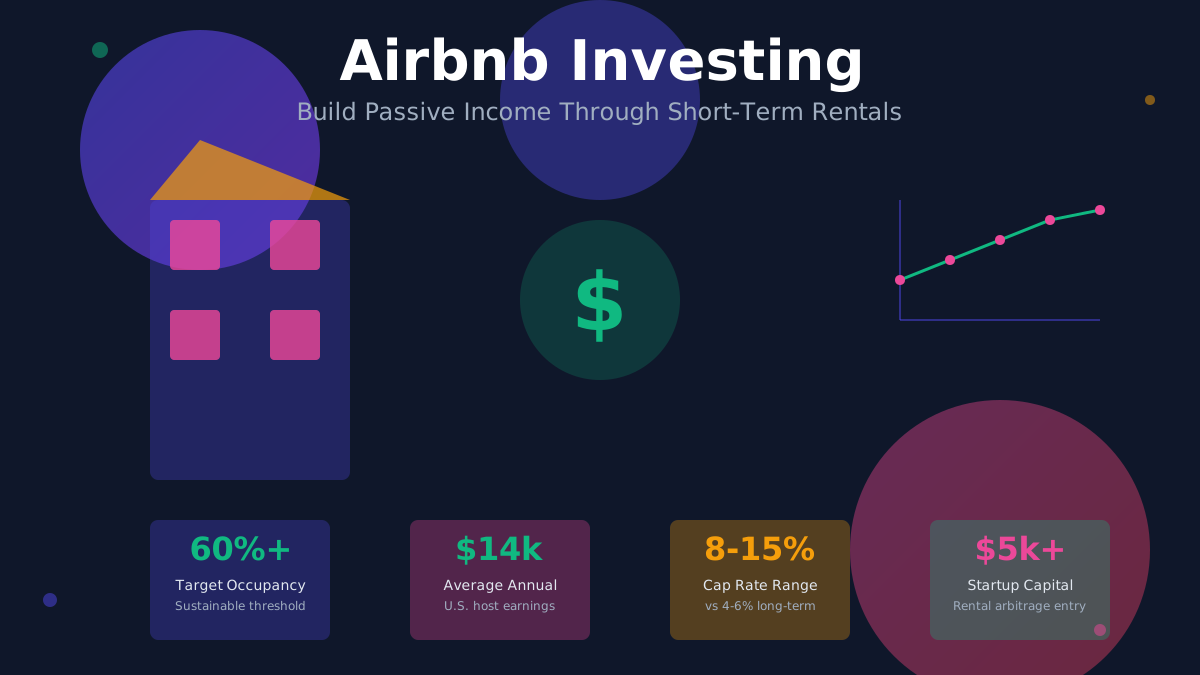
L'hôte Airbnb moyen gagne 14 000 dollars annuellement, mais les meilleurs performers sur les marchés très demandés génèrent plus de 4 000 dollars mensuels. Votre revenu dépend directement de trois facteurs : localisation, stratégie de tarification et gestion de l'expérience client.
Prêt à rejoindre plus de 4 millions d'hôtes Airbnb dans le monde ? Ce guide vous guide à travers la sélection du marché, la planification financière, la conformité juridique et les stratégies d'hébergement éprouvées pour maximiser votre revenu de location.
Qu'est-ce que l'Investissement Airbnb ?
L'investissement Airbnb est la pratique d'acheter ou de louer une propriété et de la louer sur la plateforme Airbnb pour les clients à court terme cherchant une accommodation de vacances ou commerciale. Contrairement aux locations traditionnelles à long terme qui enferment les locataires pendant 12 mois, les hôtes Airbnb peuvent ajuster les prix quotidiennement, répondre aux pics de demande et attirer les voyageurs payant des tarifs premium pour la commodité et les expériences uniques.
Ce n'est pas un conseil financier.
Trois modèles principaux existent : propriété foncière (acheter une maison pour la louer sur Airbnb), arbitrage de location (louer une propriété et la sous-louer sur Airbnb avec la permission du propriétaire) et co-hébergement (gérer la propriété d'un autre hôte pour 10-30 % du revenu). Chaque modèle offre des exigences en capital différentes, des profils de risque et un potentiel de revenu passif.
Surprising Insight: Insight Surprenant : Selon les données du marché AirDNA, la règle 80/20 s'applique au succès Airbnb—80 % de votre revenu provient de 20 % de vos efforts, spécifiquement : photographie professionnelle, stratégie de tarification dynamique et maintien des évaluations élevées des clients.
Comparaison des Modèles d'Investissement Airbnb
Comparaison visuelle de la propriété foncière, l'arbitrage de location et les modèles de co-hébergement avec les exigences en capital et les niveaux de risque
🔍 Click to enlarge
Pourquoi l'Investissement Airbnb Compte en 2026
Le marché de la location à court terme s'est transformé d'une nouveauté en un véhicule de construction de richesse légitime. En 2026, trois tendances convergentes rendent l'investissement Airbnb plus viable que jamais : la flexibilité du travail à distance signifie que les voyageurs restent plus longtemps dans les villes, générant une demande soutenue ; les cadres réglementaires se sont stabilisés sur la plupart des marchés, créant des conditions d'exploitation prévisibles ; et les outils de tarification pilotés par les données ont démocratisé l'optimisation des revenus.
Comparés aux locations traditionnelles à long terme générant des rendements annuels de 4-6 %, les propriétés Airbnb génèrent régulièrement des taux de capitalisation de 8-15 % sur les marchés désirables comme Fairbanks, Alaska (taux de capitalisation de 6,52 %, occupation de 66,5 %, revenu annuel de 54 455 dollars) et les villes de taille moyenne comme Rockford (ROI annuel moyen de 7,16 %). Le flux de trésorerie plus élevé accélère votre calendrier vers la liberté financière et permet le réinvestissement dans des propriétés supplémentaires.
La barrière à l'entrée a chuté de manière significative. Au lieu de nécessiter 40 000–100 000+ dollars pour l'acompte sur la propriété et l'ameublement, vous pouvez démarrer une entreprise d'arbitrage de location avec 5 000–10 000 dollars et tester la viabilité du marché avant de vous engager dans la propriété. Cela réduit considérablement votre risque financier tout en construisant l'expertise d'hébergement.
La Science Derrière l'Investissement Airbnb
Le modèle économique d'Airbnb est enraciné dans la thèse de l'économie de partage : les actifs sous-utilisés (chambres libres, propriétés vacantes) génèrent des revenus lorsqu'ils sont connectés à la demande. Les effets de réseau amplifient cela—à mesure que plus d'hôtes listent des propriétés, la plateforme attire plus de voyageurs, ce qui incite plus d'hôtes, créant un cycle vertueux. L'économie comportementale explique pourquoi les clients paient des primes de 20-40 % pour Airbnb : l'authenticité perçue et l'expérience locale surpassent l'efficacité standardisée de l'hôtel.
L'analyse de la saturation du marché montre que les taux d'occupation ont baissé de la moyenne de 57 % en 2024 à 50 % en avril 2025, indiquant une concurrence accrue. Cependant, cela ne réduit pas la rentabilité—cela augmente l'importance de la différenciation. Les hôtes qui maîtrisent la photographie, les algorithmes de tarification et l'expérience des clients capturent une part de marché disproportionnée. La recherche des sociétés d'analyse immobilière confirme que les propriétés avec des photos professionnelles reçoivent 2-3 fois plus de demandes que les annonces amateurs.
Facteurs de Revenu Airbnb : La Règle 80/20
Ventilation des facteurs conduisant au succès Airbnb montrant que la photographie, la tarification et les avis représentent 80 % du revenu
🔍 Click to enlarge
Composantes Clés de l'Investissement Airbnb
Sélection du Marché et Localisation
La localisation détermine 60 % de votre succès. Priorisez les marchés avec des fondamentaux solides : tourisme constant (plages, montagnes, destinations culturelles), demande de voyage d'affaires (hubs technologiques, villes de conférences) et barrières réglementaires faibles. Un taux d'occupation sain est 60 % ou plus. Fairbanks, Alaska fournit des rendements exceptionnels en raison de la localisation éloignée générant des pics touristiques ; les villes de taille moyenne comme Rockford surpassent en ROI en raison des coûts de propriété plus bas et du flux constant de voyageurs d'affaires. Utilisez l'analyse de marché d'AirDNA pour évaluer les taux d'occupation, les tarifs quotidiens moyens (ADR) et le revenu par chambre disponible (RevPAR) avant de s'engager dans le capital.
Configuration de la Propriété et Ameublement
Les configurations de propriété Airbnb pour la première fois coûtent en moyenne 3 000–6 000 dollars pour l'ameublement et les dépenses initiales. Les investissements essentiels incluent : lits confortables (1 000–2 000 dollars), équipement de cuisine (500–800 dollars), commodités de salle de bain (200–400 dollars) et fournitures de nettoyage (300–500 dollars). L'ameublement de qualité est directement corrélé aux scores de satisfaction des clients—les hôtes les plus réussis traitent leur Airbnb comme un hôtel premium plutôt qu'un hébergement budgétaire. La photographie professionnelle justifie à elle seule un investissement de 400–800 dollars, car les propriétés avec des photos professionnelles reçoivent 2-3 fois plus de réservations.
Stratégie de Tarification Dynamique
La tarification fixe laisse de l'argent sur la table. Mettez en œuvre une tarification dynamique via des plateformes comme PriceLabs ou LodgeIQ qui analysent les modèles de demande, les événements locaux, la saisonnalité et les taux des concurrents. Augmentez les prix pendant les hautes saisons (vacances d'été, festivals, conférences commerciales) et baissez pendant les vallées pour maintenir l'occupation. Les hôtes utilisant la tarification dynamique augmentent les revenus de 15-25 % sans effort supplémentaire. La formule est simple : occupation plus élevée à taux plus bas pendant les périodes creuses, taux premium pendant les pics de demande.
Expérience Client et Gestion des Avis
Votre évaluation Airbnb impacte directement la conversion de réservation. Les propriétés avec des évaluations de 4,9+ étoiles se réservent 3-4 fois plus rapidement que celles avec des évaluations de 4,5. L'excellence nécessite : expérience d'arrivée accueillante (instructions d'enregistrement, commodités de bienvenue), communication réactive (répondre aux questions dans les 2 heures), propreté de la propriété (nettoyage professionnel entre les clients) et petites touches de commodité (recommandations de restaurants locaux, guides de transport). Un avis négatif en nécessite 10 positifs pour restaurer l'évaluation. Investissez dans cette infrastructure relationnelle—elle produit des rendements composés grâce à une occupation plus élevée et des primes de prix.
| Facteur | Propriété Foncière | Arbitrage de Location |
|---|---|---|
| Capital Initial | 40 000–100 000+ $ | 5 000–10 000 $ |
| Revenu Mensuel | 1 500–4 000 $ | 400–1 200 $ |
| Risque de Responsabilité | Élevé (propriétaire) | Moyen (règles de sous-location) |
| Engagement Temporel | 15-20 h/semaine | 10-15 h/semaine |
| Point d'Équilibre | 2-3 ans | 6-12 mois |
Comment Appliquer l'Investissement Airbnb : Étape par Étape
- Step 1: Recherchez votre marché cible en utilisant AirDNA, Mashvisor ou l'analyse directe d'Airbnb. Identifiez les quartiers avec une occupation de 60 %+, des tarifs quotidiens moyens de 150+ dollars et des environnements réglementaires stables.
- Step 2: Calculez les rendements attendus : (Tarif Quotidien Moyen × Taux d'Occupation × 365 jours) - (Dépenses d'Exploitation) = Revenu Net Annuel. Visez un taux de capitalisation de 8 %+ sur la propriété foncière ou une marge bénéficiaire de 30 %+ sur l'arbitrage de location.
- Step 3: Obtenez un financement approprié à votre modèle : hypothèques traditionnelles pour la propriété foncière, prêts de location à court terme souscrit sur le potentiel de revenu de la propriété (pas revenu personnel), ou économies pour le démarrage de l'arbitrage de location.
- Step 4: Trouvez votre propriété : achetez via des agents immobiliers, négociez des baux d'arbitrage de location (assurez-vous que le propriétaire autorise la sous-location) ou connectez-vous avec les hôtes co-hébergement nécessitant une aide de gestion.
- Step 5: Investissez dans la photographie professionnelle (400–800 dollars) montrant les aspirations de style de vie, pas seulement les chambres. Les voyageurs se réservent basés sur l'émotion—faites-les imaginer leurs vacances parfaites dans votre espace.
- Step 6: Écrivez une copie d'annonce convaincante soulignant la localisation, les commodités uniques et votre personnalité d'hôte. Incluez des informations sur les attractions locales, le transport et ce qui rend votre espace spécial.
- Step 7: Définissez une tarification compétitive en utilisant un logiciel de tarification dynamique. Analysez 10-15 annonces comparables dans un rayon de 0,5 mille pour les taux de base, puis ajustez pour la saisonnalité, les événements et les modèles de demande.
- Step 8: Préparez votre propriété avec des meubles de qualité, du linge professionnel, des appareils ménagers fonctionnels et des touches de commodité (collations de bienvenue, guides locaux, services de diffusion en continu). Testez le confort du sommeil vous-même.
- Step 9: Établissez des systèmes : modèles de communication automatisés des clients, calendriers de nettoyage entre les clients, protocoles de réponse pour les urgences de maintenance et directives de communication des clients via la messagerie Airbnb.
- Step 10: Lancez avec une tarification compétitive pour générer rapidement des avis. Les avis précoces valent plus que les revenus immédiats plus élevés—utilisez la création d'élan comme votre stratégie d'acquisition pour les 30 premiers jours.
Investissement Airbnb à Travers les Étapes de la Vie
Jeune Âge Adulte (18-35)
Cette étape de la vie est optimale pour les modèles d'arbitrage de location ou de co-hébergement. Les exigences de capital plus basses (0–10 000 dollars) s'alignent sur les économies limitées. La disponibilité du temps pour la gestion des propriétés fonctionne bien avec les horaires de début de carrière flexibles. Concentrez-vous sur la construction de l'expertise d'hébergement et l'établissement d'une réputation grâce à des avis excellents—cette fondation permet la mise à l'échelle vers la propriété foncière une fois que vous avez accumulé du capital et prouvé la compétence opérationnelle. De nombreux empires prospères de location à court terme ont commencé ici.
Âge Moyen Adulte (35-55)
Années de construction de richesse maximale pour la propriété foncière. Le revenu établi, la valeur nette du logement et l'accès au financement le rendent idéal pour l'achat de plusieurs propriétés. Considérez l'approche du portefeuille : résidence principale occupée par le propriétaire plus 1-3 propriétés d'investissement Airbnb. Exploitez les réseaux familiaux pour le co-hébergement ou la gestion des propriétés. La stabilité du revenu et de la cote de crédit rendent la qualification hypothécaire plus facile. C'est quand la plupart des investisseurs Airbnb réussis construisent des portefeuilles évolutifs générant 50 000–150 000+ dollars annuellement.
Âge Plus Avancé (55+)
Exploitez la valeur nette immobilière existante de la résidence principale. Réduisez l'espace de vie et convertissez les chambres excédentaires en revenu Airbnb—cela réduit physiquement les coûts de logement tout en générant des revenus du même actif. Alternativement, convertissez la propriété de vacances en générateur de revenu toute l'année. Considérez la délégation de gestion aux enfants adultes ou aux gestionnaires immobiliers professionnels, transformant cela en un revenu véritablement passif. Avantage de la planification successorale : les propriétés Airbnb fournissent un revenu aux héritiers tandis que la maison reste dans la famille.
Profils : Votre Approche d'Investissement Airbnb
Le Bootstrapper
- Capital de démarrage faible (0–10k $)
- Rentabilité rapide pour financer le prochain projet
- Exigences minimales de temps de gestion
Common pitfall: Sous-facturer pour maximiser l'occupation au lieu du revenu—générer de l'activité sans marge bénéficiaire
Best move: Commencez avec un modèle d'arbitrage de location ou de co-hébergement. Maîtrisez l'optimisation des prix avant la mise à l'échelle. Allouez le premier bénéfice de 5 000 dollars à la photographie professionnelle et aux améliorations des annonces, pas à l'expansion.
Le Constructeur de Richesse
- Revenu passif à long terme (horizon 10+ ans)
- Avantage d'appréciation des biens
- Avantages fiscaux et stratégie d'effet de levier
Common pitfall: Sur-levier avec plusieurs propriétés avant que les systèmes ne soient prouvés, risquant des problèmes de flux de trésorerie pendant les ralentissements du marché
Best move: Achetez une propriété et perfectionnez les systèmes sur 18-24 mois. Prouvez 15 %+ de rendements annuels, puis mettez à l'échelle systématiquement. Utilisez la valeur nette de la propriété 1 pour l'acompte de la propriété 2.
L'Améliorateur de Style de Vie
- Arrangement de travail flexible à partir d'une base à domicile
- Capacité à rencontrer des clients et des voyageurs intéressants
- Connexion à la communauté locale et à la culture
Common pitfall: Traiter l'hébergement comme divertissement plutôt qu'affaires—prioriser les relations avec les clients sur la rentabilité, menant à l'épuisement professionnel et à la perte financière
Best move: Établissez des limites claires : modèles de communication professionnels, procédures d'enregistrement/départ et limites d'interaction avec les clients. Utilisez les revenus pour financer les voyages et le style de vie, pas l'inverse.
Le Gestionnaire de Portefeuille
- Propriétés multiples (3-10+ unités)
- Systèmes de gestion professionnels
- Économies d'échelle pour les opérations
Common pitfall: Expansion trop rapide sans infrastructure de gestion, menant à des problèmes de qualité, des plaintes de clients et des évaluations en baisse dans tout le portefeuille
Best move: Construisez les systèmes de gestion avant la propriété 2. Créez des procédures opérationnelles standard pour le nettoyage, la communication, la maintenance. Embauchez un gestionnaire immobilier après 5+ unités pour maintenir la qualité et libérer votre temps.
Erreurs Courantes d'Investissement Airbnb
L'erreur la plus coûteuse : ignorer les réglementations locales. De nombreuses juridictions exigent maintenant des licences commerciales spécifiques, des permis de zonage et des restrictions d'occupation. Exploiter illégalement vous expose à des amendes (5 000–50 000 dollars), à la saisie de propriété et à la suspension permanente du compte Airbnb. Recherchez les exigences municipales avant d'acheter une propriété—cela élimine 70 % des investissements Airbnb échoués.
La deuxième erreur la plus coûteuse : sous-estimer les dépenses d'exploitation. Les nouveaux hôtes budgètent pour l'ameublement (4 000 dollars) mais négligent : nettoyage professionnel entre les clients (100–300 dollars/rotation), augmentation d'assurance (1 500–4 000 dollars/an), services publics (200–500 dollars/mois), maintenance et réparations (2 000–5 000 dollars/an) et frais de plateforme (3 % Airbnb + 3 % processeur de paiement). La dépense totale s'élève souvent à 35-45 % du revenu, pas les 15-20 % que les débutants supposent.
La troisième erreur : embaucher des gestionnaires immobiliers ou des prestataires inexpérimentés. Le nettoyage professionnel compte énormément—une plainte d'un client sur la propreté se cascade en dommages d'évaluation affectant 100+ réservations futures. Investissez dans des professionnels vérifiés, pas l'option la moins chère. De même, négociez soigneusement les conditions du bail pour l'arbitrage de location—les attentes conflictuelles du propriétaire causent la majorité des échecs de l'arbitrage.
Points d'Échec Courants d'Investissement Airbnb
Ventilation des raisons pour lesquelles les investissements Airbnb échouent ou sous-performent
🔍 Click to enlarge
Science et Études
La recherche académique et industrielle fournit des conseils concrets pour les investisseurs Airbnb. La recherche du marché de la location à court terme indique que l'industrie a atteint 68,64 milliards de dollars en 2024 et devrait croître de 7,4 % CAGR jusqu'en 2030, atteignant 102,86 milliards de dollars. La maturité du marché est confirmée par les taux d'occupation en déclin (57 % en 2024 à 50 % en 2025), indiquant une consolidation vers les hôtes performants.
- Intelligence du Marché AirDNA : Fairbanks, Alaska domine les marchés nord-américains avec des taux de capitalisation de 6,52 % et une occupation de 66,5 % ; Rockford maintient un ROI annuel moyen de 7,16 % malgré un positionnement de mi-marché
- Analyse Lodgify (2024-2026) : Les propriétés avec photographie professionnelle reçoivent 2-3 fois plus de demandes ; la tarification dynamique augmente les revenus de 15-25 % par rapport aux taux statiques ; l'occupation de 60 %+ représente la durabilité du marché sain
- Recherche Mashvisor : L'hôte Airbnb américain moyen gagne 14 000 dollars annuellement ; les annonces actives de maison entière sur les marchés premiers génèrent 40 000–60 000 dollars par an ; la saturation du marché a changé le succès vers la différenciation et l'excellence opérationnelle
- Académie des Compétences Immobilières : Le principe 80/20 identifie la photographie (35 %), la stratégie de tarification (30 %) et les avis (15 %) comme moteurs de 80 % des résultats de réservation ; les 20 % restants incluent la qualité de la description, la gestion de la saisonnalité et les commodités des clients
- Analyse de Prêt STR de Certain Lending : Le financement de la location à court terme souscrit sur le potentiel de revenu de la propriété (pas revenu personnel) permet des ratios d'effet de levier plus élevés pour les investisseurs Airbnb ; l'exigence d'acompte moyenne est 20-25 % par rapport à 25-30 % pour les hypothèques traditionnelles
Votre Première Micro Habitude
Commencez Petit Aujourd'hui
Today's action: Passez 30 minutes à rechercher les annonces Airbnb dans un quartier que vous envisagez—analysez 10-15 annonces compétitives pour la tarification, les modèles d'occupation, les commodités et les avis des clients pour comprendre la viabilité du marché avant tout engagement en capital.
Cet habitude unique élimine les plus grandes erreurs d'investissement Airbnb : acheter une propriété sur un mauvais marché, surestimer les taux d'occupation ou sous-facturer. Trente minutes de recherche de marché informée prévient les pertes de 50 000+ dollars de la sélection d'un mauvais emplacement.
Suivez vos sessions de recherche de marché et votre progrès d'investissement avec les fonctionnalités de coaching de création de richesse de notre application.
Évaluation Rapide
Quelle est votre expérience actuelle en investissement immobilier ou en location à court terme ?
Votre niveau d'expérience détermine le modèle de démarrage optimal : les débutants devraient essayer l'arbitrage de location (5-10k $ capital), tandis que les investisseurs expérimentés peuvent immédiatement mettre à l'échelle vers la propriété foncière.
Combien de capital pouvez-vous déployer pour démarrer l'investissement Airbnb ?
La disponibilité en capital détermine directement votre stratégie d'entrée et le calendrier de rentabilité. Plus de capital = mise à l'échelle plus rapide mais aussi un risque plus élevé si le marché s'avère défavorable.
Quel résultat compte le plus pour vous de l'investissement Airbnb ?
Votre objectif principal façonne la stratégie : flux de trésorerie → arbitrage de location, richesse → propriété foncière, style de vie → co-hébergement, portefeuille → expansion systématique avec systèmes de gestion.
Prenez notre évaluation complète pour obtenir des recommandations personnalisées.
Découvrez Votre Style →Questions Fréquemment Posées
Prochaines Étapes
Votre première action détermine votre calendrier. Si vous avez moins de 10 000 dollars de capital, recherchez les opportunités d'arbitrage de location sur les marchés à occupation élevée—contactez les propriétaires dans les quartiers désirables et proposez des arrangements de sous-location. Si vous avez 40 000+ dollars, identifiez les marchés cibles en utilisant l'analyse AirDNA et commencez la pré-qualification pour les hypothèques de location à court terme. Les deux chemins devraient commencer par une recherche de marché pour valider l'opportunité avant l'engagement financier.
Dans 30 jours, complétez ces étapes concrètes : (1) Recherchez 3-5 quartiers cibles en utilisant AirDNA ou l'analyse directe d'Airbnb, (2) Analysez 10-15 annonces compétitives pour comprendre la tarification et les modèles d'occupation, (3) Calculez les rendements attendus pour le capital disponible, (4) Recherchez les réglementations locales et les exigences de licence, (5) Connectez-vous avec les gestionnaires immobiliers locaux ou les hôtes expérimentés pour les informations du marché. Cette fondation prévient la majorité des échecs d'investissement Airbnb.
Obtenez des conseils personnalisés avec le coaching IA.
Commencez Votre Voyage →Research Sources
This article is based on peer-reviewed research and authoritative sources. Below are the key references we consulted:
Related Glossary Articles
Frequently Asked Questions
Combien d'argent ai-je besoin pour démarrer l'investissement Airbnb ?
Le capital minimum varie selon le modèle. L'arbitrage de location nécessite 5 000–10 000 dollars pour les dépôts, le marketing et les opérations initiales. La propriété foncière nécessite 40 000–100 000+ dollars pour l'acompte, les frais de clôture et l'ameublement. Le co-hébergement nécessite 0 dollar de capital de démarrage—vous gérez la propriété d'un autre pour 10-30 % des revenus.
Quel est le revenu moyen de l'hébergement Airbnb ?
L'hôte Airbnb américain moyen gagne 14 000 dollars annuellement. Les annonces de maison entière sur les marchés premiers génèrent 40 000–60 000 dollars par an. Les revenus dépendent de la localisation (occupation et tarifs noctambules), du type de propriété et de la gestion de l'expérience client. Les 10 % meilleurs des hôtes sur les marchés compétitifs gagnent 80 000–150 000+ dollars annuellement.
L'investissement Airbnb est-il légal dans ma ville ?
Les réglementations varient considérablement selon la localisation. De nombreuses villes exigent des licences commerciales spécifiques, des permis de zonage ou des restrictions d'occupation (par exemple, max 180 jours/an). Certains quartiers interdisent Airbnb entièrement. Vérifiez les exigences municipales AVANT d'acheter une propriété—exploiter illégalement risque des amendes de 5 000–50 000 dollars et la suspension du compte.
Combien de temps jusqu'à ce que mon Airbnb devienne rentable ?
L'arbitrage de location s'équilibre dans les 6-12 mois si la localisation et la stratégie de tarification sont solides. La propriété foncière nécessite 18-36 mois pour récupérer les coûts d'ameublement et de configuration. Le calendrier de succès dépend du taux d'occupation du marché, de la discipline des dépenses d'exploitation et de la stratégie de tarification efficace.
Puis-je commencer avec l'arbitrage de location et passer à la propriété foncière ?
Oui—c'est le chemin recommandé pour les investisseurs limités en capital. Commencez l'arbitrage de location pour comprendre les opérations d'hébergement, construire les avis et l'évaluation, tester les hypothèses du marché. Le profit de 12-24 mois d'arbitrage de location finance l'acompte de la propriété. Cela réduit le risque par rapport à l'achat d'une propriété sans expérience d'hébergement.
Take the Next Step
Ready to improve your wellbeing? Take our free assessment to get personalized recommendations based on your unique situation.
- Discover your strengths and gaps
- Get personalized quick wins
- Track your progress over time
- Evidence-based strategies